Raising Awareness for Triple Negative Breast Cancer: A Conversation with Dr. Lisa Newman
Interview by Hana Rashid
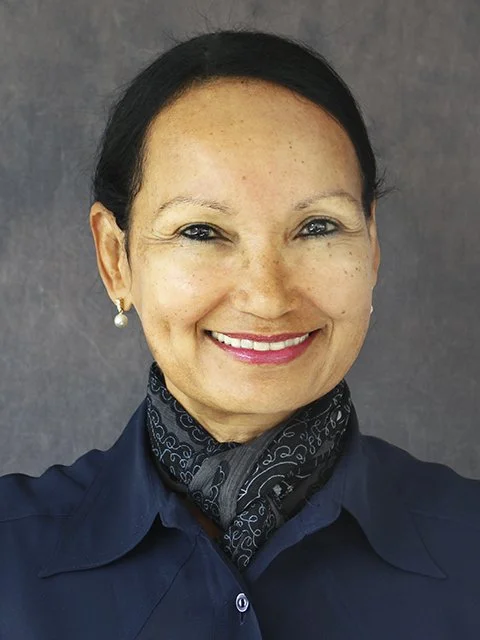
Triple negative breast cancer (TNBC) is the most aggressive form of breast cancer, disproportionately affecting younger women and women of color compared to other breast cancer subtypes. Dr. Lisa Newman, Founding Medical Director for the International Center for the Study of Breast Cancer Subtypes, currently headquartered at Weill Cornell Medicine, and chief of breast surgery at Weill Cornell tells us about her mission to raise awareness for this disparity.
Hana Rashid (HR): Thank you so much for taking the time out of your busy schedule to meet with me, Dr. Newman. Can you please start by telling us about how you decided to be an oncologist?
Dr. Lisa Newman (LN): Well, my interest in medicine actually evolved from television. It sounds silly, but you know, in my era growing up, there weren't very many African American legacy medicine families around, and my family was no different, but after school, my mom and I used to watch a soap opera called General Hospital every day. I just thought it was the coolest thing to be a physician, and Dr. Leslie Weber was my role model. The fact that medicine is such an incredibly exciting, energizing field stuck with man, I've been committed to the field and have no regrets.
My interest in oncology actually came about much, much later. I was fortunate to spend time at Harvard, where you are now, for my undergraduate years. Then, I came back home to New York and went to medical school at Downstate Medical Center in Brooklyn, New York. I had no idea when I started medical school that I would be interested in surgery. From the moment I walked into the operating room, I knew there was no other path that I could follow. I just completely fell in love with the field. I subsequently fell in love with the practice of general surgery, where you do a little of everything: trauma, critical care, taking care of benign surgical problems, and cancerous surgical problems. I ended up doing my general surgery training in Brooklyn and stayed on staff at downstage practicing general surgery in Brooklyn. But back then, there really were not very many women surgeons around, and so very naturally, my own practice generated a lot of women who wanted to see a female surgeon to take care of their breast problems. And this was going back to the 1990s.
My practice was based in Brooklyn, with tremendous diversity in the patient population. With my growing practice of women with breast problems, I was just hit in the face at my office on a daily basis with the disparities that existed in the breast cancer burden of my African American patients compared to my white American patients, with the black women tending to be much younger when they were diagnosed and tending to have the more advanced cancers, and tending to have recurrences with the best treatments that we had available at that time. That's what actually motivated me to go into surgical oncology because I wanted to be involved with research to address these disparities and understand the causes of these disparities. After seven years of practicing general surgery in Brooklyn, I did a surgical arcology fellowship at MD Anderson in Houston, Texas. I loved MD Anderson, and Houston is also esteemed by the fact that it is the home or a wonderful organization called the Sisters Network Incorporated. The Sisters Network Incorporated is a National Organization of African American women that are breast cancer, survivors, and advocates, and they were involved with these incredible programs that resonated with me because of my interest in addressing disparities, and they had an interest in helping their community to generate forceful messages regarding West health to get black women to present with their breast cancers earlier. Their motto was "Stop the silence." They wanted the African American community to be aware of ways to protect themselves from the threat of breast cancer through early detection and also through becoming involved with research.
While I was at MD Anderson, I had the honor of being able to involve myself with the Sisters Network Activities. One of their activities was the gift for Life of Blockwalk, where volunteers would just go into African American neighborhoods and literally knock on doors to spread the word about breast health awareness. And then fast forward, subsequently after I professionally relocated to Michigan, I was able to connect with some women who were involved with organizations that were aligned with the Sisters Network, and they basically ended up becoming chapters of the Sisters Net Network, based in Detroit. Michigan. The Sister Strut was just so much fun. It was launched in Detroit by some wonderful women that I remained friends with today. One of them was a radio personality, Frankie Darcelle, and her mom was a patient of mine. And I remember so clearly the first time I had the pleasure of meeting Frankie in person. It was actually a heart-wrenching experience. Her mom was one of my patients, and I had to break the news to her mom that she had been diagnosed with a locally advanced breast cancer, and she just crumbled. It was such a difficult thing for her to hear. She told me to call her daughter, Frankie. I called Frankie, and I heard this amazing voice on the phone that I had been listening to every day on the radio, driving to work. She was the radio personality that was my absolute favorite, so it was just such an incredible experience to connect with Frankie through this difficult but very personal and emotional experience. And fortunately, her mom did actually, absolutely great. She came through treatment and very, very successfully managed for her breast cancer. But Frankie became the voice, literally, of the Sista Strut and the sisters' network activities in Detroit, and the process just continued to spread. So now Frankie is actually still a radio personality, but based in Philadelphia, and she has Sister Strut based in Philadelphia. They still have been in Detroit and other cities across the country. So my dream is to make a sister's strut happen in New York City.
HR: Why do you think this disparity exists?
LN: Well, we've learned a lot about the biology of breast cancer since the old years when I was first observing disparities and my general surgery practice, and in particular, we've learned a lot about the diversity of breast cancer as a diagnosis. Breast cancer, as you know, comprises an entire spectrum of different tumor subtypes. It became more personal to me than I ever wanted it to be with my own sister who was diagnosed with triple-negative breast cancer and subsequently died from this disease.
Triple-negative breast cancers are twice as common in African American women compared to white American women. In reality, socioeconomic disadvantages are also problems that face our healthcare system that we have an obligation to address and eliminate. That is, step number one. But tumor biology also makes the difference, and the fact that African American women are twice as likely to develop these biologically aggressive triple negative breast cancer contributes to the disparities that we see with black women having a 40% higher death rate from breast cancer compared to white women. My only research has ended up evolving into a research program that's heavily rooted in international efforts, and I've had the honor of over the last 20 years, partnering with researchers and clinicians in different regions of Africa to understand the breast cancer burden of women with African ancestry on the continent.
Africa's obviously a huge continent associated with tremendous genetic diversity, lifestyle, environment, dietary diversity. We recognized early on that we needed to have partners in different parts of the continent, and one of the things that we learned relatively early on was that these triple negative breast cancers are extremely prevalent among women in the Western sub-Saharan region of the continent. But they're actually fairly uncommon among women with breast cancer in East Africa. And the frequency of triple negative breast cancers in African American women is intermediate between what we see in women from Western sub-Saharan Africa and what we see in women with European background, white American women. So that actually makes sense when you think about it, and when you just think back to grade school, social studies, we all learned about the transatlantic slave trade, which brought the ancestors of contemporary Western sub Saharan Africans across the Atlantic Ocean to serve as leaves in the colonies so as contemporary African Americans, we have a lot of shared genetic African ancestry with contemporary Western sub Saharan Africans. The slave trade from East Africa, on the other hand, largely went further eastward to the Middle East and to Asia. So as African Americans, there's just not as much shared ancestry with contemporary East Africans. So that led us to hone in more robustly on the genetics of specifically Western sub-Saharan African ancestry as being linked to this hereditary susceptibility for triple native press cancer. And that work in turn has led us to uncover the fact that some of the genetic variants associated with Western sub-Saharan African ancestry are related to variants that were acquired by our ancestors in the need to survive infectious diseases that are endemic to that part of the continent, such as malaria. And some of these genetic variants have downstream effects on the breast tissue microenvironment and the immune landscape of the breast. And so by connecting the dots between some of these variants and triple-negative breast cancers, we are not only going to learn more about the causes of disparities right here in the United States, but it's going to teach us a lot about the root causes of triple-negative breast cancers and better ways to treat triple negative breast cancers. So I'm still very, very excited about the potential for these international efforts, not only because of these research prospects, but because they are wonderful capacity building efforts. We are able to invest in the cancer treatment services and the research facilities that are available in the hospitals where we work across the continental Africa, and we've made some great friends along the line, too.
HR: What are the first steps that we, as a community, can take to address this disparity?
LN: The act of staying personally engaged with your community and educating women, spending time with women, whether it's in the clinic, one-on-one, or in churches, civic organizations, staying involved with the community is huge. We can do a lot through working with the media and having celebrity partners that are willing to speak about their own experiences and to get messages out about breast cancer awareness. The personal touch and personal effort of being involved in the community to talk about what we need to do to take care of ourselves is still huge, and having partners in the community, with advocacy and organizations makes those efforts that much more effective.
HR: That was perfect, Dr. Newman. Thank you so much.
A Q&A interview with Dr. Stuart Orkin exploring his academic journey and discovery of BCL11A and hemoglobin switching.