Examining Approaches to Bridging Healthcare Divides for Native American Communities: A Conversation with Dr. Thomas Sequist
Interview by Erin Li
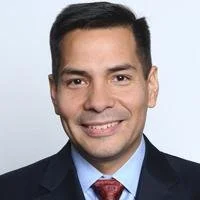
Dr. Thomas Sequist, MD, MPH, is the Chief Medical Officer at Brigham and Women’s Hospital, and he previously served as the Patient Experience and Equity Officer. In these roles, he leads efforts to improve the quality of patient experiences, and his research focuses on ensuring equitable access to healthcare, especially for marginalized populations such as Native American communities. He is also a general internist at the hospital and a Professor of Medicine and Professor of Health Care Policy at Harvard Medical School.
Erin Li (EL): Thank you so much for your time today, Dr. Sequist. To begin, can you briefly introduce yourself, your current role at Massachusetts General Hospital, and any other background information that you think is relevant?
Thomas Sequist (TS): My name is Tom Sequist. I’m currently a primary care physician at Brigham and Women's Hospital in Boston, and I'm the chief medical officer for Mass General Brigham, the integrated delivery system here in Boston. In terms of facts about myself, I’m a Taos Pueblo Indian. My tribe is in northern New Mexico; that is where my family is. In terms of my education background, I went to college at Cornell University, where I studied chemical engineering. I went to medical school here at Harvard Medical School, and then trained in internal medicine at Brigham and Women's Hospital here in Boston. I finished, after that, a fellowship in general medicine, and through that, received a master's in public health at Harvard School of Public Health. For the first 10 years or so of my faculty life at Harvard, I was primarily an academic faculty researcher and studied healthcare quality, health disparities and inequity, and American Indian and Native American health policy. Today, I'm a professor of medicine and healthcare policy, both at Harvard Medical School.
EL: I read that you lead MGH’s United Against Racism priority area. Can you describe this initiative, its impact on patient care, and any key challenges you faced during implementation?
TS: One of my roles as the Chief Medical Officer for the organization is to oversee our quality transformation—to drive us to performance improvement in all aspects of quality. We think about quality by following the Institute of Medicine's original report on quality from a couple decades ago: it breaks down into quality being reflected by delivering effective care, delivering safe care, delivering equitable care, delivering a good patient experience, delivering efficient care, and delivering timely care. These are the six facets of quality. Equity is one of them, and a really important piece of the quality puzzle. One of our initial areas of focus with regards to health equity has been in the space of racial differences in healthcare, with a particular eye towards how we improve patient outcomes for certain populations, such as the Black or Hispanic patient populations. We also have a focus on language, specifically the population of patients who don't speak English as their primary language. It was in the summer of 2020 that we really started our United Against Racism campaign. Health equity in general is a core operating principle for us. When we try to improve care, we always seek to make sure that we are improving care for everyone, regardless of their background. It is really challenging work because I would say health equity in particular is heavily influenced by factors outside of the hospital or clinic environment. For example, what I mean by that is, if you want to provide really good care for patients with diabetes, and you want to achieve good outcomes for patients with diabetes, one portion of that is medication management, things like insulin therapy or offering good clinical recommendations to them in the clinics or in the hospital. But also a big portion of that is what your diet is like at home, how much exercise you get, how much stress is in your life, and some of these other factors. Those aren't necessarily factors related to the clinic or the hospital. Those factors are present in all kinds of disease management, but they become particularly important when attempting to achieve health equity because we know that social risk factors and their prevalence present a challenge to good patient outcomes. That prevalence is higher among the Black patient population, the non-English-speaking population, and the lower-income population. So, achieving health equity becomes harder in that space.
EL: I've also read that you've conducted research related to healthcare for Native American populations. Through your research, how have you seen Native American communities being disproportionately impacted by healthcare disparities in the hospital and in the community, and how do you envision your research contributing to meaningful change in healthcare systems or policies?
TS: When I was a medical student and a resident, my dream was to become a physician, go back to New Mexico, and be a practicing physician and help provide care for the Native populations there. One of the things that I was exposed to here at Harvard was health policy and systems research. I just didn't really know that this field existed when I was an undergraduate student, or even a medical student. I started to become convinced that one of the ways I could potentially have even greater impact beyond being a practicing physician in New Mexico was to start doing a lot of health policy research to inform what are the best roads we should take to improve health outcomes for the Native population. That’s why I went down that road. Twenty years ago, there was a large gap in our understanding of the clinical outcomes and public health outcomes for Native populations across the country. So I went down that road to try to fill that gap with the hopes that it would generate new knowledge so that we could provide better programs for Native communities. What I learned through that work was a couple of really important things. One is that one of the biggest barriers–-maybe in fact the biggest barrier—is actually funding for initiatives that will actually improve the health status of the Native population. That funding breaks down into two categories. The first category is what I think of as basic public health infrastructure. That's basic needs, public housing, road infrastructure, and jobs and employment. The second funding and adequacy for Native populations and communities is actually healthcare delivery funding—the funding of the hospitals, the doctors, the nurses, all of that kind of work that goes into providing medical care. There's a funding gap on both sides. You both need good housing and good road infrastructure. For example, to achieve good health outcomes, you need things like good basic water supplies, indoor plumbing, and everything. You also need good hospitals and good doctors and nurses; we underfund both of those for Native populations. That was the first thing that I learned: that we just have a funding inadequacy for the American Indian population. The second thing I learned through doing all of this work is that—in part due to the funding inadequacies, but also in part due to many other factors—we have a challenge in access to care for these communities, and that access to care challenge comes both in terms of the fact that care sites are very distant from these communities: you may have to travel hundreds of miles to get to the nearest physician or hospital that's needed to provide care for you. It also comes in the form of the fact that we actually just don't have the doctors, nurses, or other technologies that we need to provide that care. You may find that we have large vacancy rates in physician, nursing, dentist, and other medical professions. So you may show up at the hospital, but there's not the physician, nurse, or dentist there that you need. That’s another big challenge in terms of access. To me, fundamentally, when people ask me, “What's the biggest thing that we could do to improve Native health outcomes?” the answer is funding. That will help address the access issues, and then we should build on that, providing the highest-quality care possible. But it's really hard to do that with no funding or with inadequate funding.
EL: What role do you see technology playing in closing these health gaps?
TS: The Indian Health Service, which provides care for around half of the total Native population, has been a very early adopter of technology, going back 20-30 years ago. The Indian Health Service and other tribal healthcare organizations have adopted technology such as electronic health records and telemedicine. Telemedicine received a huge boost during the COVID pandemic, and, very quickly, advancements were made. But, in the country before COVID, we didn't use telemedicine to a great extent: most care was still in person. Now, since 2020, we have done a lot of video visits, telemedicine visits and such. But the Indian Health Service has been using remote and telemedicine programs going back to the 90s—a very long-term user of technology. People say that necessity is the mother of invention; it was born out of this reality that these patients were 200 miles away—or a four hour drive away—from the nearest specialist physician that they needed to see, so they came up with another solution. So, I do definitely feel that technology plays a huge role in supporting care for Native communities.
EL: Even though technology could play a huge role in healthcare, how have you seen or do you foresee any new disparities emerging because of the usage of technology?
TS: We definitely see the reverse of this. If you go back to the COVID pandemic, one inequity—seen in cities and rural areas, and impacting particularly low-income populations, including non-English speaking populations, native communities, and rural areas—is broadband access. The foundation of so much of the technology that we use here today in Boston and that we may take for granted sometimes is broadband access. If you don't have broadband access, nothing works very well, including your credit card when you go to the gas station to buy gas or the ATM machines that we use. I raise those issues because it's not just that the electronic health record won't work well, or that our telemedicine or video visits can't be conducted if we don't have broadband; if you don't have broadband, a lot of things don’t work. Basic infrastructure doesn't work. When you look at broadband access across the country, there are inequities in it by community and sometimes for the Native community, which disproportionately has a larger percentage of folks who live in rural and remote areas. The Native community is then disproportionately impacted by this lack of broadband access because you literally have to lay wire—fiber optics—to reach these communities, and you have to determine the return on investment for that. For example, you would spend a lot of money to get broadband access to Manhattan because then you have millions of customers to use that line that you paid money to lay. But, if you have to lay fiber optic cable hundreds of miles to reach a community that has 1,000 people living there, you have to determine the return on investment. Now, my strong position on this is broadband access is a basic core requirement in society today, and we should be ensuring that that's present everywhere, across the entire country and across the entire world. Until we address that, we will continue to have inequities in technology. Now, there are other inequities in technology, such as who has access to smartphones and who uses desktop computers versus laptop computers. There are technological inequities and differences across populations in not just the hardware components, such as who has a smartphone, but also the software components, which involves whether these apps are bilingual and written at the right literacy level. What you find is that, often the app developers will design an app for a very high end user in mind, and then try to reverse engineer it to be in other languages or to be at a lower literacy level. When you do that, it might feel like watching a movie in a different language, and there's a difference between being a native speaker of the language and reading the subtitles. There is a whole chain of inequities that can happen in technology. But I really do continue to emphasize the first thing we should start with is universal broadband access.
EL: I read that you direct the Brigham and Women’s Hospital Physician Outreach Program with the Indian Health Service. Based on this experience, how do you ensure that partnerships between tribal health systems and academic medical centers are built on mutual respect and sustainability. What are some culturally grounded practices that you found essential for building trust and improving care delivery?
TS: We have to acknowledge, going in, that there is very likely to be a lack of trust, and the very first job that we have when we are establishing these relationships is to build trust. We are dealing with communities that have had hundreds of years of interactions, and we have to acknowledge that many of those interactions have not been good and have engendered a completely explainable lack of trust between Native communities and other parts of our society. So, I would say the first thing you have to do is to enter with humility and recognize that your first goal is to build trust. Then, the second thing you have to do is to acknowledge that the agenda is theirs, the native communities or any community that you're working with; the agenda is not your own. You should ask yourself: what is it that you believe that they need, and how can we help in a partnership with that? That's a really important way to view establishing a relationship between an academic center like Harvard and a tribal community. The third thing is to come in and to think about how you can partner with the community. We should ask ourselves: how can we improve a health-related program? How can we work with you to improve the health of your tribal members? Our first priority is not to ask whether we can publish the work that we're doing. That’s really important because the currency of academic faculty life is often publications and research. But we have to acknowledge these outreach programs with Native communities are built on volunteerism and community health; they are not an academic collaboration. We actually don't publish at all on the work that we're doing there because we're really just focused on how we can meet the needs of these communities.
EL: What have you found most rewarding in your work so far? What areas do you hope to further explore or expand upon in the future?
TS: I like to believe that the most important work that we can do is to improve the health of the patients that we are caring for and the communities that we serve around us, whether they be local communities here in Massachusetts or our national and international communities. That's the thing that drives me the most. I hope that, one day when I look back on my career, I can say that I had some impact in that space. Everything that we do, whether it's student pipeline programs for Native students, building better health systems within our Mass General Brigham, or our community outreach programs here in Dorchester or Chelsea, or in the Navajo Nation in New Mexico and Arizona, everything is built on that principle of helping to improve the health status of those communities or patients that we're taking care of. That's what I feel drives me the most and what I get the most value from.
EL: Thank you for sharing so many insightful perspectives. I really appreciate you meeting with me and speaking about your incredible work!
A Q&A interview with Dr. Stuart Orkin exploring his academic journey and discovery of BCL11A and hemoglobin switching.