An Interview With Dr. Aaron Kesselheim
Interview by Reema Guda
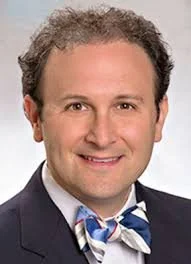
Reema Guda (RG): Can you provide me with a little bit of information about your background in medicine, law, and public health, and what led you to pursue these three different fields?
Dr. Aaron Kesselheim (AK): I am a primary care doctor and lawyer and Professor of Medicine at Harvard Medical School and Brigham Women's Hospital. I developed a research center called PORTAL, or the Program On Regulation, Therapeutics And Law, which is an interdisciplinary research group based at Brigham Women's Hospital in the Division of Pharmacoepidemiology and Pharmacoeconomics that focuses on issues related to prescription drugs and their regulation, use, clinical outcomes, development, and pricing. Most of what we do is focused on prescription drugs; using quantitative and qualitative research techniques, we publish research studies in the medical literature, and then push those studies out to policymakers interested in the topics that might affect the way that prescription drug regulation and payment markets work to try to encourage fair access to essential medicines for patients, both here and overseas. We are one of the largest and certainly one of the most prolific independent academic-based research organizations in the world that focuses on these issues and [we] intersect a lot with policymakers at the federal and state levels on questions related to prescription drug policy. I was interested in being a physician for a long time, and got interested in health care policy, actually, when I was an undergrad at Harvard. At the same time, there was a lot of health policy in the news, and I got this sense that there are a bunch of other people, including lawyers, who were making decisions that were affecting how doctors take care of patients, and I wanted to see if I could get involved with helping patients that way, on a population level, as well as in the clinic.
RG: For people who might not be familiar with the intersection between law and health care, how specifically is this intersection present in the work that you're doing right now or any specific projects that you've worked on in the past?
AK: The way that the FDA functions is incredibly important to the availability of drugs that doctors use and patients benefit from. Other aspects of health care policy affect the availability of drugs because some drugs are very expensive and patients can't afford them. But why are drugs very expensive? And how is it that we pay for and test drugs? What kind of rules need to be in place to ensure that those tests are optimally useful for the patients who are going to rely on those drugs? I think those are a lot of the ways that the law and regulation impact the kind of care that physicians can provide. For example, we've been writing and researching for a long time about why drugs are so expensive in the US. Brand-name drugs are two to three times more expensive in the US than they are everywhere around the world. And about 1/3 of people in the US report that they or a family member have had trouble affording a prescription in the last year. The reason why drug prices are so much higher in the US than other high-income countries is because we allow drug companies to set whatever price they want for their brand name drugs. A couple of years ago, the Inflation Reduction Act was passed, which, for the first time in history, gave Medicare the ability to negotiate the prices of a very small number of drugs at the end of their market exclusivity periods. While it may not have been the wide-ranging change that we would have wanted, it was a transformative step in the right direction. We got to go to the White House to celebrate the passage of that bill, because a lot of the research that PORTAL has done over the years has created the empirical basis on which it was recognized that reform legislation such as the IRA needed to be passed.
Another example of the work that we do influencing policy is research examining drug patents and how the thickets of patents that brand-name companies build around their drugs can make it harder for there to be timely access to generic or biosimilar medications that improve competition and help provide lower cost access to patients. For example, we've pointed out that there are a lot of drug patents that cover the delivery device for drugs. In these cases, the patents on the drug itself have all expired, but the drug still doesn't have competition, and one of the main reasons is that there are patents on the inhaler device or the injector device. Our research on that has been cited and used in efforts that the Federal Trade Commission has led to encourage companies to delist their patents from the FDA to allow there to be more timely availability of generic drugs. So that's the kind of work that we do, and the ways that the work that we do affects the health care that patients in the US receive.
RG: In a general sense, what broad effects do you personally think that the current administration is going to have on public health and, more specifically, what do you think is the most harmful action that they've taken so far and its implications?
AK: Changes that are made at the government level can very strongly affect the kinds of care that patients receive and that physicians can provide. This administration has started attacking some of the basic rules and principles that underlie a lot of our health care system and our pharmaceutical market. Specifically, for example, the FDA is one of the most important public health institutions in the world, and is fundamental in making sure that the drugs that become available are appropriately tested and vetted to ensure that they have a certain level of efficacy and safety. One of the very first things that the administration is doing is cutting the workforce at the FDA. Indiscriminate reductions in force undermines the ability of the FDA to get its essential work done, and get it done in a timely manner. A likely end result is the decision making at the FDA is worse and takes longer, and both of those things will harm patients, both immediately and down the road.
Another thing the current political administration can do is to take steps to undermine what the government says and the actions that it takes about the products the FDA regulates, which can make a big difference. There are advisory committees in the government that make decisions that then impact the availability and coverage of vaccines by insurance companies. My understanding is that the administration initially sought to delay the meeting of various advisory committees. Some have suggested that they could try to replace the people serving on such committees with activists supporting the administration’s political agenda. Even certain announcements – like they're going to study the link between vaccines and autism, which has been disproven by multiple studies over many years – can reduce the trust that people have in the products and can have important effects on people's willingness to have their kids vaccinated like they should be. These examples show that medicine doesn't operate just between individual doctors and patients. It operates in a larger societal context of the actions of the government and the statements made by powerful organizations like the FDA and CDC.
Another thing I would point out is that the research of the National Institutes of Health is the source of a lot of the most important drug innovation that we have. Via NIH-funded research in academic medical centers and research carried out in government laboratories, drug companies get important ideas and early research that then gets turned into products. And what we've seen in the first few weeks is that the administration has taken steps to stop the funding of science through the NIH and pull back on grants that the NIH has already given. All that's going to do is reduce our ability to do the science that we need to identify the next great discoveries. So that's another way that what the government is doing is exceedingly dangerous to the public health, the pharmaceutical market, and the scientific enterprise in the US and the world.
RG: Already, the current setup of the US health health care system is putting lower income and minority groups at a disadvantage when it comes to affording and accessing proper healthcare. So how are these policies going to possibly affect this already vulnerable group of people, and will it possibly exacerbate the gaps that already exist?
AK: Yes, of course it will. Unfortunately, there are systematic disparities in people's abilities to access [health care] according to their ability to afford things and where they live, and I think that it takes a concerted effort to try to fix those things to try to ensure that everybody gets access to the medications, and health care in general, they need. One of the things the administration has done in the last couple of weeks is try to erase the discussion of those kinds of disparities from the discourse and that is dangerous, because not talking about them doesn't mean that those disparities go away. This approach can even make it worse, because the way that we help address those disparities is by talking about them and trying to figure out what the best ways are of trying to address them. Once again, let’s take the information put out by the FDA and CDC that has been altered or suppressed in the last few months. These sources of information can be extremely important for patients with low socioeconomic status because they can be used to inform getting such patients the care that they need. Thus, there are a lot of different ways that the disparities you mentioned will be exacerbated on the current trajectory that the presidential administration is on.
RG: What are some things that policy makers, physicians, hospitals, and anyone in the public health or policy fields should be doing to try to combat these attacks on public health? Is there anything that we even can do at this moment?
AK: Sure! First off, you can try to combat these attacks by raising your voice and calling out what you think is wrong. You have to say, “This is wrong”, “Here's what the evidence shows”, or “Here's my experience” as a frontline clinician, or a hospital CEO, or as a head of a health care system, or the head of a university or academic medical center. Frame the conversation as “Here's the great work that we do, here's the system that we had then, and here's why what you're doing is wrong.” Raising your voice when you see something that is going wrong is one thing that we haven't seen enough of so far from a lot of those different sources you mentioned.
I think that other things that people can do is, again, to take the lead and not just follow in line. Maybe the FDA or CDC isn't talking about disparities in health care anymore, but that doesn't mean that those have gone away. We're going to need states and large health care systems to step in if the FDA and CDC pull back for now. We're going to need ethical health care systems and state and local governments to step into the void and emphasize that we still need to operate our health care system in a way that's evidence-based and attuned to the realities of care, and so even if the government is moving in the wrong direction on these topics, that doesn't mean that we have to do that. I think that we should also expect industry to do that as well, although that group has been very quiet. I think that's another major voice that needs to speak out about this, because they depend on strong and effective FDA and CDC just as much as hospital systems, doctors, and patients do.
RG: Obviously this is a really hot topic right now, just considering everything that the new administration is doing in their first few months in office, but the spread of misinformation, the increasing distrust in science, and the attacks on health in America has been developing over the past few years. And so what would you say to current students who might be thinking about pursuing a career in public health but are scared of the budget cuts and hiring freezes that might occur and put the field at risk in the future?
AK: Getting involved in public health work is really important, and there are ways of getting involved at the state and local levels. There are ways of getting involved at the international level. And at some point in the future, there will be ways of getting involved at the federal level again when new policies that have already started to be shown to be so damaging are rejected and need to be replaced. It's a critically important area and if it's something that you love, then you should pursue it and try to figure out ways of getting involved at any level. The most important thing is to do what you enjoy doing, and everything else will fall into place after that.

A Q&A interview with Dr. Stuart Orkin exploring his academic journey and discovery of BCL11A and hemoglobin switching.