Systems of Care and Care for the System: A Conversation with Dr. Elysia Larson
Interview by Anaïs Pité
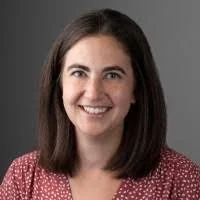
HUHPR writer Anaïs Pité sat down with Dr. Elysia Larson, ScD, an implementation scientist, maternal health researcher, and advocate for person-centered care. Dr. Larson is a Staff Scientist in the Department of Obstetrics and Gynecology at Beth Israel Deaconess Medical Center and an Assistant Professor at Harvard Medical School. She began her academic journey studying biology and mathematics at McGill University, where a lecture on cancer epidemiology sparked her passion for public health. A formative gap year spent teaching sexual and reproductive health in rural Tanzania further deepened her commitment to equity-driven, community-informed healthcare. Over the years, Dr. Larson’s research has focused on improving the quality and responsiveness of health systems in both U.S. and global contexts, with particular attention to maternal care. In this interview, she discusses the power of collaboration in reforming healthcare systems, the importance of elevating patient experiences, and the need for bi-directional learning across borders. Dr. Larson also shares insights into her ongoing work on doulas in surgical settings and how de-implementation is just as critical as innovation in the pursuit of health equity.
Anaïs: Perfect. So I just wanted to thank you again for taking the time to speak with me today. And I just wanna dive right in and ask how everything started for you? Where you received your education, where you found your passion for your work, etc.
Dr. Elysia Larson: Sure. So I did my undergraduate degree at McGill and I did a very science focused degree, majored in biology and mathematics with a minor in chemistry. And in my last semester at McGill, I took a biology of cancer class, and there was one lecture on the epidemiology of cancer. And it was during that class that I was like, this is it. This is what I want to do with my life. And so, because I was finishing up and getting ready to graduate, it was too late to apply for grad school immediately. So I knew I was going to have this gap year, and so I ended up applying for and having this amazing opportunity to go to Tanzania for a program called Students Partnership Worldwide. So I was in Tanzania for nine months. I was partnered with somebody else who was doing a gap year who was Tanzanian, and we went through training in a manualized intervention to support sexual and reproductive health for primary school students. And then we were placed in a rural village where we lived. And then we worked in the primary school and taught this manualized intervention. It was a phenomenal experience on so many levels, but one of the things that really I had the opportunity to see was how many people were working in Tanzania to improve public health and how often people were doing this work with the best intentions in mind and thinking that they were doing work, great work. And how many unintended consequences were coming out of that work right instances where? People were likely being harmed. And where there were probably some outcomes that were counter to the primary goal of those who were implementing the interventions. And so that really led me to focus on evaluation work, which eventually led into this field of implementation science and learning health systems that I’m in now. But, that was really where it all got kicked off was having this amazing opportunity to live and work in a culture that was different from my own. To be humbled by working with folks that came from very different backgrounds. For my own learning from them and then also seeing that there was an opportunity for research to really play a role in how we design and implement programs.
Anaïs: That’s so interesting. I read that your research focuses on improving health system quality, especially in maternal care, in both US and international context. So I was wondering what made you interested in this area? I know you touched on it, but if you could elaborate, that’d be perfect.
Dr. Elysia Larson: Yeah, sure. So I think that, you know, we think about health as being co-produced. It’s produced by individuals. It’s produced by communities and it’s produced by our health system. So I thought that there was really this opportunity to work in an area that has a huge impact on health, and do it in a way that really works at this intersection between the community and the health system to really make sure that the health system was being responsive to what the community actually needs to be able to maximize the benefit that it has.
Anaïs: Perfect. You mentioned your gap year, so you’ve worked in countries like Tanzania, the US, across vastly different health systems. What have you learned about what makes a health system feel person centered, especially for women and urban people?
Dr. Elysia Larson: Yeah, I think that this is a really good question, right? So there has been a lot of work over the past two decades that has looked at quality of care, not just being around the safety of the care that we provide, but also around the experiences that individuals have while they’re there and making sure that this care is person centered and responsive. So I think that, from what I’ve seen working across these really diverse health systems, there’s both a systems-level person centeredness and then individual person centeredness within a clinic visit or an interaction. With the clinic visit and interaction level what I see is that there’s a pause where there is a humanizing of the person that you’re working with. You’re not thinking of them as just a number in your system or just a row in your book where. You’re documenting what their ailments are, where you’re thinking about them as a whole person. and really, pausing to look at them. Itt’s similar at the health system level when it’s person centered, it’s thinking about people as individuals and as part of their community and thinking about what their needs are and really incorporating their views in a meaningful way into the design of your system, the delivery of. The care and then the evaluation of the care that you’re giving.
Anaïs: You use implementation science in your research, a term that seems to be getting a lot of more attention recently. For someone unfamiliar, how would you describe its purpose?
Dr. Elysia Larson: Sure. So we think about the research implementation pipeline as being very long, right. So from the time that we know something works to the time that it is commonplace, it can often be multiple decades. And the role of implementation science is really to shrink that timeline to, so to say we have something we know it works and it’s working in this specific, perhaps idealized situation. Can we make it be effective more broadly? Can we bring it to scale? Can we make sure that it's the reach that it’s getting to the populations that we need it to get to and so that's the main purpose of implementation science? The flip side that I think is gaining more traction recently and I think is Important to discuss as well is the idea of de implementation. So we often have a lot of practices in, in public health or in medicine that have actually been shown to not be effective, but they’re just commonplace and that. Deimplementation work is in many ways equally as important as the implementation work.
Anaïs: And I know you’ve written about developing person centered measures. Why is it important to listen to how people experience care, not just whether they received it and what stories or patterns have stuck with you?
Dr. Elysia Larson: Sure. So I think that we think about this person centered care patient experience as being both intrinsically important and instrumentally important. So it’s intrinsically important because we all deserve to be treated with respect and dignity, and the health system is meant to serve the community, it’s meant to serve its patients. So it is a key factor of the health system to be treating them with respect and dignity, it’s intrinsically important. It’s also instrumentally important. There’s a lot of research that has demonstrated that better patient experience leads to better patient outcomes. It’s associated with better technical quality care, safer care. It’s also associated with an individual’s likelihood of returning to that health system. So thinking about maternal health, this is critical, right? If I have a good patient experience, then when my child is sick, I am more likely to bring them back to the health system. So it helps to build that trust, the trustworthiness of the health system, and therefore have these far reaching impacts on community health. One thing that I did want to add to this with when you asked what story stuck with me, we have one research project that’s one of my favorite research projects. The lead is Tiwadeye Lawal who was a medical student at the time, and she interviewed around 20 patients for whom they expected to have one thing happen during their birthing experience and something else happened. Or they wanted to have something happen and then something else happened and she interviewed them and it was fascinating to see how, despite this discordance between what they wanted or expected, people still had really good experiences and they had really positive attitudes moving forward, and this all had to do with how the clinicians supported them, how they communicated with them.
Anaïs: Yeah, this is now a question that I had planned on asking, but I recently attended a Black Health Matters conference and we had a speaker and she spoke about the relationship between a doula and the physicians and clinicians in the room. She kind of spoke on how there’s kind of a tension between the two, especially when it comes to the birthing experience and how she works on trying to break down that tension. Because at the end of the day, it all comes down to what the patient wants, and I feel like that’s kind of very similar to what you mentioned about having good experiences when receiving care in hospitals.
Dr. Elysia Larson: It is, and there’s research that has looked at this and and looked at that tension. We are currently doing a lot of research specific to doulas in the OR. So for a long time folks have really touted that doulas are great and they’re important, and one of the things that’s great about them is that you’re less likely to have a C section if you’ve had a doula, right? But one of the unintended consequences of that narrative is that oftentimes people feel that there’s no need for a doula if you’re going into the C section, right, like the doulas are for vaginal births, they’re for home births, so they’re for, you know, uncomplicated birth. That is just not the case, right? There is still a huge role for doulas to play in emotional support, in advocacy, in communication; all these things that they’re doing during a vaginal birth, in a C section birth. I think that that’s important work that we’re currently going through right now is breaking that down for clinicians and making sure that that understanding, communication, and collaboration is really strong, so that those tensions can be reduced.
Anaïs: Second to last question, health systems are often slow to change, especially when built around top down models. What do you think needs to shift in how we approach health reform, especially in historically underserved communities?
Dr. Elysia Larson: Yeah, I think that the biggest thing here is collaboration and collaborating with communities and individuals. So both users of your system and people who are in your community, and your catchment area who are not using your system. So we talk a lot about user perspective and we need to be talking about just the community perspective of the health system. They will have solutions for you, right? And the other thing is that they will be able to tell you if your solutions just aren’t going to work and save you a lot of effort. Right. So when we’re doing these top down approaches, it goes back to, you know, my initial comment on seeing unintended consequences happening in Tanzania. Same thing is happening here. All the time, right? Things that people are well-intentioned and they’re just not going to work and some good conversations with the people we are serving could help to illuminate that a lot sooner.
Anaïs: Yes, I completely agree. I went to Peru back in January, on a service learning trip, and on the first day they took us on a reality tour. A reality tour is essentially when you visit different parts of Peru and the different communities that live there. So we went to every community just to kind of grasp what they need and what we can do to help them instead of just jumping right in and treating them. We had three days of mobile clinics and I think that being able to see how the community lives emphasized how different communities are across the world and how we need to take into account the community to determine what we can do to serve them and help us change the way we provide medical care.
Dr. Elysia Larson: Totally. I think one of the things that this is making me think of that isn’t in one of your questions but I would love to speak to is that we have a very colonial approach to health system reform and to what is high quality care, right? And so we we do have this approach of like we’re going to do a service project or like I volunteered in Tanzania. So coming from the West and moving to the global South. What I have really done in my career is this reverse shift, where I spent a whole a bunch of time over, you know, a decade working in Eastern and sub-Saharan Africa and then seeing when I had my babies here, how much we really had to learn from how things were done in Tanzania in particular, right? So I had two children in the Boston area at a hospital here. They were fine experiences, but it really highlighted how much we had to learn and so that learning needs to be bi directional. Especially in collaboration, especially in task sharing and in mental health like there are areas that there has been tons of research and progress in Eastern and southern Africa, in in particular that I think we in the US could benefit from.
Anaïs: Yes, absolutely 100%. And then last question, what’s something you wish more policymakers or funders understood about maternal health and global health quality research?
Dr. Elysia Larson: I wish that they understood the power of a collaborative and of diversity and voices, early on and often. So from the beginning of developing what is your research question, in my case because I’m doing research, but in folks who are doing QI work or folks who are setting up new systems or new interventions. From the very beginning, what is it that everybody who’s involved wants to know? What are they bringing to the table and then giving folks power so that it’s not just the people with the most education who are making these final decisions, but that it’s the folks who are going to be most impacted by what we do.
Anaïs: Perfect! That’s all the questions I wanted to ask you. If there’s anything you want to add, please feel free. If not, I just wanted to thank you again so much for taking the time to participate in this interview!
Dr. Elysia Larson: Yeah. My pleasure. Thanks for inviting me!
A Q&A interview with Dr. Stuart Orkin exploring his academic journey and discovery of BCL11A and hemoglobin switching.