Redefining Disability Insurance: A Conversation with Dr. Nicole Maestas
Interview by Olaeze Okoro
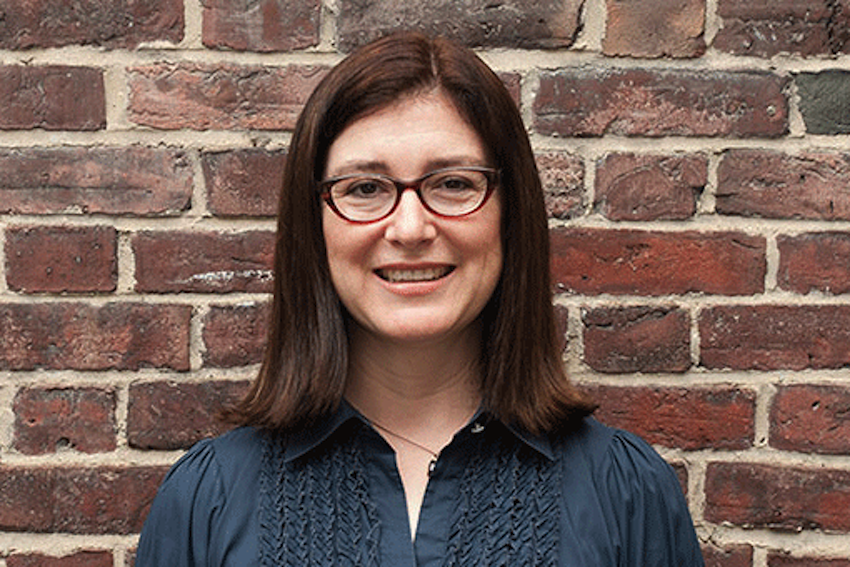
HUHPR writer Olaeze Okoro conducted an interview with Dr. Nicole Maestas, PhD. Dr. Nicole Maestas is a leading economist specializing in health care policy, labor markets, disability insurance, and population aging. She holds the prestigious John D. MacArthur Professorship at Harvard Medical School, where she also serves as Chair of the Department of Health Care Policy. In addition to her academic leadership, she is a Research Associate at the National Bureau of Economic Research (NBER) and directs its Retirement and Disability Research Center. Her work explores how health and disability insurance systems shape economic behaviors, such as workforce participation and access to medical care. She also examines how shifting demographics, particularly an aging population, impact economic growth and workplace conditions for older employees. More recently, Dr. Maestas has been investigating opioid prescribing trends, the intersection of Medicaid policies with Supplemental Security Income (SSI) recipients, and disparities in health care access. Her scholarship is widely recognized, with publications appearing in top journals across economics, health policy, and medicine. She earned both her M.P.P. and Ph.D. in Economics from the University of California, Berkeley, solidifying her foundation in policy research and economic analysis. Through her work, she continues to inform discussions on health care system reform, disability policy, and labor market dynamics.
Olaeze: Thank you Dr. Maestas for agreeing to speak with me today. Let's get started with the economics of disability insurance. How did you become interested in this kind of research?
Dr. Maestas: Well, I had always been interested in labor economics and health economics, and disability economics is actually the intersection of both labor and health. And it's also an area where we have a major federal program called Social Security Disability Insurance that is designed to support people to support workers who are experiencing very severe health problems and who become unable to work. It's an important human event that can happen to anybody. But also we have a major federal kind of insurance program designed to help people, so that means there's a role for federal policy. And so I've always been very interested in how policies impact people's economic behaviors, and by that, I mean things like their decisions to work, their ability to work, or their healthcare consumption, healthcare utilization.
Olaeze: Can you explain how the federal disability insurance system impacts employment outcomes for individuals with disabilities?
Dr. Maestas: My research has shown that when people with disabilities receive a disability insurance award that's a cash benefit it basically enables them to stop the work they might have been doing. So we call that a work disincentive effect of the program. And my earlier research showed that we were able to estimate the amount by which people reduce their earnings when they get disability insurance benefits. But what my current ongoing research is beginning to find is that they are reducing their work effort from a really, really low amount. Yeah, they reduced a little, but they weren't making very much to begin with. And in fact, far below what you might think they could make given the program rules.
Olaeze: What are the key policy changes that you think would improve the federal disability insurance system for workers?
Dr. Maestas: I would like to see it possible for some kind of partial disability benefit that would allow somebody to work as much as they can, but also receive a partial benefit. Right now, the way the Social Security disability insurance system is designed, it's largely you either can work or you can't work, and the rules make it very hard to combine work with benefit receipt for people who actually do have a little bit of work capacity and would like to engage in some work. It turns out a lot of people with disabilities would like to do a little bit of work. I would say the majority of those who apply for disability benefits have no work capacity left, so we're really just talking about a small sliver, maybe 20% of applicants who maybe do have some work capacity that they would like to express. People often want the option of doing what work they can, but that work capacity, because they are very sick and have disabilities, isn't necessarily a full-time work capacity. So if we could find a kind of partial solution where people could do both, that's what I have proposed.
Olaeze: I know that your research also highlights the rise in employment among individuals with disabilities. What factors do you think people believe are driving this trend?
Dr. Maestas: Well, I think the rise of telework during the COVID pandemic had a lot to do with the recent acceleration in employment rates among people with disabilities. But it's important to note that the rise began well before the pandemic. And so I do think there's something going on in firms in the labor market that is making it easier for people with disabilities to sustain employment. I'm not sure exactly what it is, but it could be that employers are more willing to offer accommodations to workers with disabilities. Or maybe the nature of jobs is changing enough that it's easier to find a job that matches the physical abilities or cognitive and physical abilities that somebody has left. I have several research studies underway that are trying to figure out just because you can't do the job you were doing, maybe you could do other jobs. If we could figure out what that right mapping is between the functional abilities that somebody has and their skills and background with the functional abilities that are needed for jobs, we might be able to shed light on what their other options are.
Olaeze: I can see how passionate you are about this topic. I just love listening to you talk about it. Where do you see it going?—the intersection between disability insurance polities and labor market trends. How do you see that changing in the next decade?
Dr. Maestas: I think some of the factors that are driving the change are these longer run forces that will continue. Here's an example: We have an aging population, which means you have relatively more older individuals who aren't working compared to younger individuals who are able to work. That's a concept that you often see called an aged dependency ratio or the ratio of your potential workforce to your potential non workforce. So, you can think about statistics like that. The US is only going to get older and older and older, which means we'll just have fewer and fewer workers to support the older population as we go forward. So, we need any and all people to work if they can, in order to support our standard of living in the US. That pressure is not going away. It will continue and it will get even stronger. And so there is this need for labor, right? And this need for labor creates conditions where employers might say, okay, well, we'll give you the accommodation that you're asking for, say it's telework three days a week, or something else will give you that accommodation because we, you know, we need the labor, right? That's what I kind of see happening—jobs will evolve. It will continue to evolve in ways that will be favorable for people with disabilities. At the same time, of course, there are some short run fluctuations that may make it harder to see the long run underlying trend.
Olaeze Okoro: Is there any more work to be done? Is there any of your current research that kind of delves back into this?
Dr. Maestas: I'm continuing to do work on this very topic, trying to characterize and understand the labor demand forces that are at play here. What is happening on the employer's side if you drive this growth in unemployment? That's one piece I'm working with a very talented graduate student. Another piece is, again, trying to explore whether better matches could be made between people's physical and cognitive functional abilities and the requirements of jobs. If you have a tool that tells you what potential occupations somebody could do, then you could think about whether there were interventions that could help somebody transition from what they had been doing to one of these other options as an actual really practical step toward helping people transfer their skills and knowledge to new areas. You can even imagine like a tool in the end that that helps make that happen for people.
Olaeze Okoro: That's amazing. It's a very simple in concept way to tackle this problem which is just so interesting.
Dr. Maestas. Yeah, we're studying multiple ways of doing this. I have two NIH grants that support this work. The point is to try to improve the independence of people so that they aren't solely dependent upon Social Security disability insurance.
Olaeze: This was a really great topic. Is there anything else that you would like to add about potential policy changes that you would like to see any other part of your research that you want to highlight?
Dr. Maestas: I'll just say another NIH grant that I have. Given the current environment, it's important for people, I think, to see the value that society gets from the NIH research that is done here at Harvard. Another one is where we're trying to investigate why people who need mental health care don't get it in the US. There's such a gap there between need and what people actually get. And so one idea that we've been exploring is to understand what we call the provider landscape, across the nation. Where you live relative to mental health care providers, for example, but for everybody, like when I'm really large scale. So we can actually say things like X percent of the population lives within a 30 minute drive to a mental health care provider of a particular type, right? And then you can look at policy changes that have happened in recent years or consolidations or private equity investments and see, do those things help make it better? Or do they make it worse? And so you can imagine, for example, let's say, you live in an area where a hospital system—a large hospital system—merged with another hospital system. Well, maybe that additional scale helps improve the coordination of your care within that now larger system. Or maybe the consolidation causes them to shut down clinics in your neighborhood and raise prices and more providers leave the system. So you could see how it could go either way. There could be improvement in access to care, and when that happens there could be no effect. Or there could be reductions and access to care. So we're looking at a variety of policies and focal events like private equity takeovers or mergers/acquisitions to try and understand how this changing landscape is playing into the access that people feel on the ground, like real people in communities on the ground. So we've got really, really big data sets that we're bringing to bear on this, and just hoping that we get to continue doing the work.
Olaeze Okoro: This is really great work that you're doing. I’m so grateful and a lot of people are going to be very grateful for the things that come out of this. I hope that you can continue to do what you're doing. Thank you for interviewing with me!
Dr. Maestas: Well, just remember the research speaks for itself, right? The research really tells the story of what we all do, so thank you for taking the time to listen.
A Q&A interview with Dr. Stuart Orkin exploring his academic journey and discovery of BCL11A and hemoglobin switching.