Climate Change and Public Health: Navigating the Growing Risks of a Warming Planet
Hailey Akey
Introduction
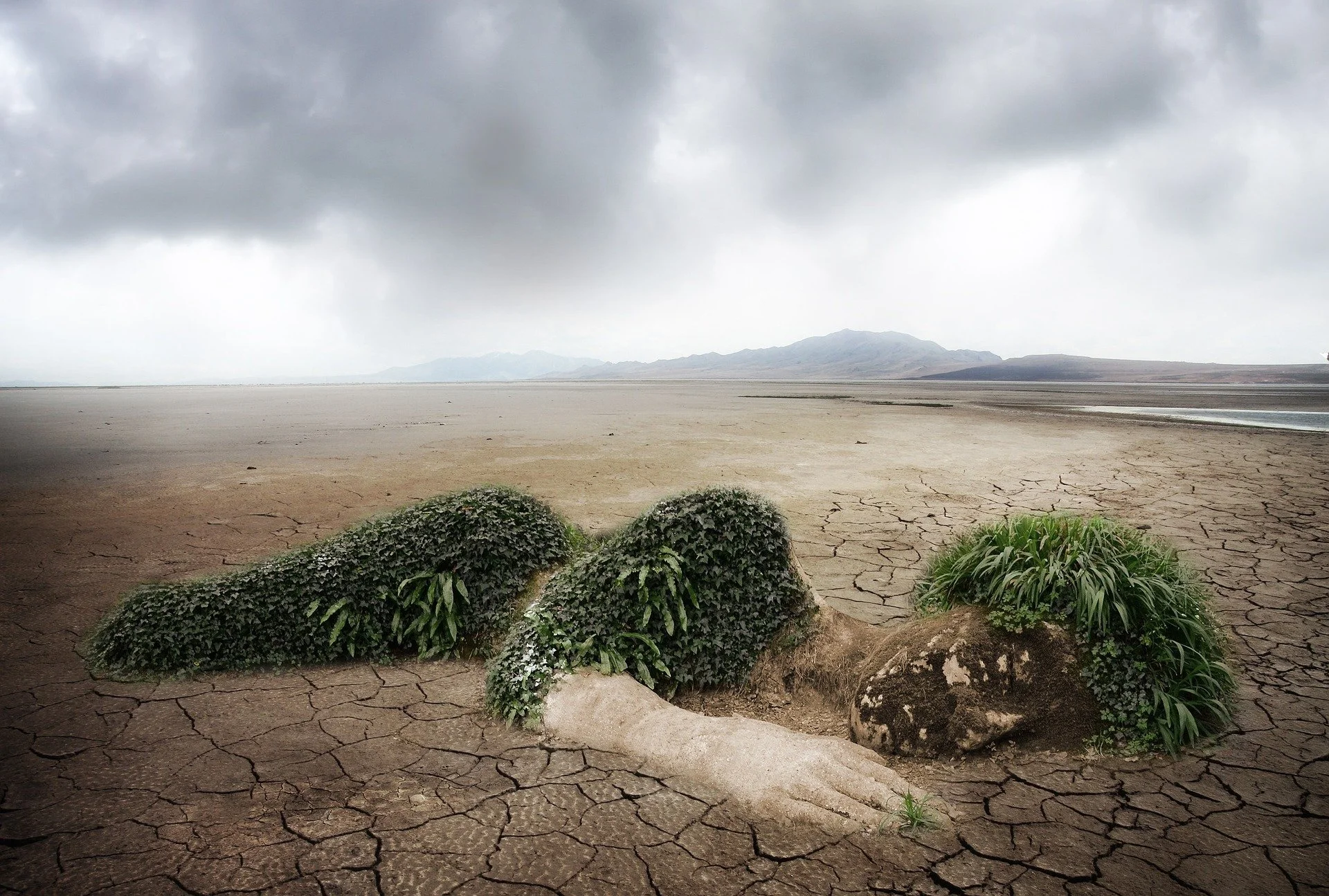
Climate change and the environment have become a topic of immense discussion and debate in recent years. While much of the discussion often focuses on greenhouse gases, renewable energy sources, and the like, there is a budding field that expresses the interdisciplinary nature of climate change — climate epidemiology. This field explores the negative health consequences that should be expected as the earth continues to warm, including impacts on food availability, water cleanliness, and extreme heat & other extreme weather events. An effect that seems somewhat overlooked in general discussion, though, is the role of temperature and precipitation changes in enhancing the spread of vector-borne diseases.1 Aaron Bernstein, Caroline Buckee, and Marcia Castro, experts at Harvard University’s T.H. Chan School of Public Health, find that increases in malaria and diarrheal diseases, or even another pandemic, are some of the infectious disease threats posed by climate change.2 The World Health Organization “conservatively projects” an additional 250,000 deaths annually by the 2030s due to climate change’s impacts on diseases like malaria and coastal flooding.3 These impacts are not bounded by our arbitrary borders — they will affect people all over the world. Both governments and medical professionals need to be adequately prepared and aware of the effects of climate change on the spread of diseases. After COVID-19, the disastrous effects of epidemic diseases were made clear; thus to prevent impending chaos, immediate action is crucial.4
Current Policy
There is a lack of policy specifically addressing disease and health changes due to climate change. The Inflation Reduction Act of 2022 under President Joe Biden is widely considered the most comprehensive climate legislation in US history, investing $350 million to help varied stakeholders lower greenhouse gas emissions.5 However, this bill was created to support economic actors and notably, this Act does not emphasize health. A review of the White House’s website page on “President Biden’s Historic Climate Agenda” highlights saved money on energy bills, economic opportunities provided by clean energy, and emission goals.6 Information regarding climate resilience mentions extreme heat, flooding, wildfires, and other climate disasters. These are all incredibly important parts of mitigating the effects of climate change; yet, there is only one general mention of public health, a field that is just as important.
Not all hope is lost, though. Organizational bodies such as The Office of Climate Change and Health Equity are working to address the impacts of climate change on the health of Americans. Some of their actions are not substantive, such as the vague pledges, announcements, and commitments that organizations make but rarely follow. Resources are currently being developed to provide heat-related illness data, track building’s greenhouse gas emissions, and provide information to patients who are vulnerable to climate change’s health impacts.7 Yet there isn’t much actionable policy to prevent these issues from occurring in the first place. Given this precarious moment in our relationship with the earth, that should be our priority.
Potential Danger
Current models of disease spread and health expenditure showcase the need for preparation. The components of vector-borne disease systems are highly responsive to the environment.8 Erin Mordecai, a Stanford biologist, and her colleagues have made forecasts and models of how climate change will alter where mosquito species are most comfortable and how quickly they spread diseases — America is not immune to this. Even a few degrees of warming can have varying effects; “Mordecai’s research has found that warmer temperatures increase transmission of vector-borne disease up to an optimum temperature or ‘turn-over point.’”9 In short, the geographic range of certain diseases may expand or shrink, depending on the particular temperature change in the area; disease spread depends on the adaptation or acclimation of vectors who carry pathogens through and between ecosystems.10
There is already evidence of this occurring. The Intergovernmental Panel on Climate Change reported that the prevalence of vector-borne disease has increased in recent decades and that the prevalence of diseases like malaria and dengue is expected to further increase during the next 80 years if no action is taken.11 Additionally, Aaron Bernstein, co-director of the Center for Climate, Health, and the Global Environment at the Harvard T.H. Chan School of Public Health, explained in 2023 how tick-driven Lyme disease was showing up in Canada for the first time.12 This is not a problem for the future. This is a problem of the present and warrants action.
Conclusion and Policy Solutions
Climate conversations in any case are a wonderful starting point. However, increased emphasis must be placed on some of the more overlooked consequences of climate change — including the effects on health. With increased knowledge in the public health and medical communities, as well as increased focus by governments, we can begin effectively preparing for this intensifying issue. Climate change exacerbates current inequalities, meaning those who suffer from poverty, poor housing, malnutrition, environmental injustice, etc. are those who will suffer the most from these predicted health changes.13 As a result, health is an essential factor in discussions about climate change. Health professionals need to be educated on the specific vector-borne diseases anticipated to emerge in their regions, and health systems need to become more climate-resilient and sustainable across the board.14 Of course, none of this can occur without beginning an actionable and equitable plan of decarbonization and transitioning away from abundant fossil fuel use. It is well known and understood that “we must slash greenhouse gas emissions in half by 2030, and reach net zero emissions by 2050 to prevent catastrophic consequences.”15 That is step one, and it’s time to get to work.
References
- Jordan R. How does climate change affect disease? | Stanford Doerr School of Sustainability [Internet]. 2019 [cited 2024 Oct 25]. Available from: https://sustainability.stanford.edu/news/how-does-climate-change-affect-disease
- Feldscher K. Finding solutions to climate change’s health impacts | News | Harvard T.H. Chan School of Public Health [Internet]. [cited 2024 Oct 25]. Available from: https://www.hsph.harvard.edu/news/features/finding-practical-solutions-to-climate-changes-health-impacts/
- World Health Organization [Internet]. 2023 [cited 2024 Oct 25]. Climate change. Available from: https://www.who.int/news-room/fact-sheets/detail/climate-change-and-health
- Yehya N. UC Davis Health. 2024 [cited 2024 Oct 25]. Experts warn climate change will fuel spread of infectious diseases. Available from: https://health.ucdavis.edu/news/headlines/experts-warn-climate-change-will-fuel-spread-of-infectious-diseases-/2024/03
- Inflation Reduction Act Programs to Fight Climate Change by Reducing Embodied Greenhouse Gas Emissions of Construction Materials and Products | US EPA [Internet]. 2024 [cited 2024 Oct 25]. Available from: https://www.epa.gov/inflation-reduction-act/inflation-reduction-act-programs-fight-climate-change-reducing-embodied
- Actions | HHS.gov [Internet]. [cited 2024 Oct 25]. Available from: https://www.hhs.gov/climate-change-health-equity-environmental-justice/climate-change-health-equity/actions/index.html
- National Climate Task Force | The White House [Internet]. 2021 [cited 2024 Oct 25]. Available from: https://www.whitehouse.gov/climate/
- Thomson M, Stanberry L. Climate Change and Vectorborne Diseases. New England Journal of Medicine [Internet]. 2022 Nov 23 [cited 2024 Oct 25]; Available from: https://www.nejm.org/doi/full/10.1056/NEJMra2200092
- Jordan R. How does climate change affect disease? | Stanford Doerr School of Sustainability [Internet]. 2019 [cited 2024 Oct 25]. Available from: https://sustainability.stanford.edu/news/how-does-climate-change-affect-disease
- Thomson M, Stanberry L. Climate Change and Vectorborne Diseases. New England Journal of Medicine [Internet]. 2022 Nov 23 [cited 2024 Oct 25]; Available from: https://www.nejm.org/doi/full/10.1056/NEJMra2200092
- IPCC Sixth Assessment Report [Internet]. [cited 2024 Oct 25]. Climate Change 2022: Impacts, Adaptation and Vulnerability. Available from: https://www.ipcc.ch/sr15/
- Feldscher K. Finding solutions to climate change’s health impacts | News | Harvard T.H. Chan School of Public Health [Internet]. [cited 2024 Oct 25]. Available from: https://www.hsph.harvard.edu/news/features/finding-practical-solutions-to-climate-changes-health-impacts/
- Islam SN, Winkel J. Department of Economic & Social Affairs. UNITED NATIONS.
- Actions | HHS.gov [Internet]. [cited 2024 Oct 25]. Available from: https://www.hhs.gov/climate-change-health-equity-environmental-justice/climate-change-health-equity/actions/index.html IPCC [Internet]. [cited 2024 Oct 25]. Global Warming of 1.5 oC. Available from: https://www.ipcc.ch/sr15/


Healthcare consolidation—through both vertical and horizontal mergers—has reduced competition and driven up prices for drugs and medical services, making care less affordable for uninsured and underinsured Americans. The piece highlights state tools like Medicaid 1115 uncompensated care pools and discounted fee schedules, but emphasizes that stronger federal antitrust enforcement, updated regulations, and better-resourced agencies (FTC/DOJ) are needed to curb monopolistic practices and protect access to affordable care.