The Push for MA Statewide CPR Mandates: Bill H.492
Zhixiao Yip
Abstract
Abstract
Out-of-hospital cardiac arrest (OHCA) affects over 350,000 Americans annually, with survival highly dependent on immediate bystander CPR—yet only 40.2% of victims receive such aid. In Massachusetts, where no statewide requirement mandates CPR education for high school graduation, this represents a critical gap in emergency preparedness. This paper advocates for Bill H.492, which mandates hands-on CPR and AED training in high schools. It highlights how early CPR education increases confidence and willingness to act, particularly among adolescents, who are likely bystanders in school settings. Additionally, standardized CPR training can help address racial disparities in OHCA survival, as minority communities currently face lower rates of bystander CPR linked to lower chances of survival. In fact, studies show that even brief, low-resource CPR instruction—particularly when guided—is effective, and that even student instructors can be just as impactful as certified professionals. Ultimately, mandating CPR education in schools is a cost-effective, practical strategy to improve survival outcomes and public health equity.
Introduction
Every year, approximately 436,000 Americans die from cardiac arrest, 350,000 of which from an out-of-hospital cardiac arrest (OHCA). Yet, a 2021 study showed that of those patients, only 40.2% were able to receive immediate bystander CPR. Given that only 9.1% of patients treated solely by Emergency Medical Services (EMS) outside of the hospital survived to discharge, the need for more immediate CPR care is crucial. In fact, access to such immediate, high-quality CPR can double – or even triple – a person’s chances of survival. Yet, despite efforts as early as 2017 to mandate CPR and AED instruction in highschools, and the reintroduction of the bill to the state legislature every year since, Massachusetts remains one of 10 states in the United States without a CPR education requirement to graduate high school. Such legislation is significant: 5-10% of all adolescent deaths between ages 5-19 nationwide are from cardiac arrest. Moreover, while Massachusetts does require child care workers and educators to get CPR training, students make up the majority of the population in a school, and thus remain the most-likely bystanders at the scene of a cardiac arrest. As such, CPR education for students is a crucial step for improving OHCA survival.
Language of Legislation Mandating CPR
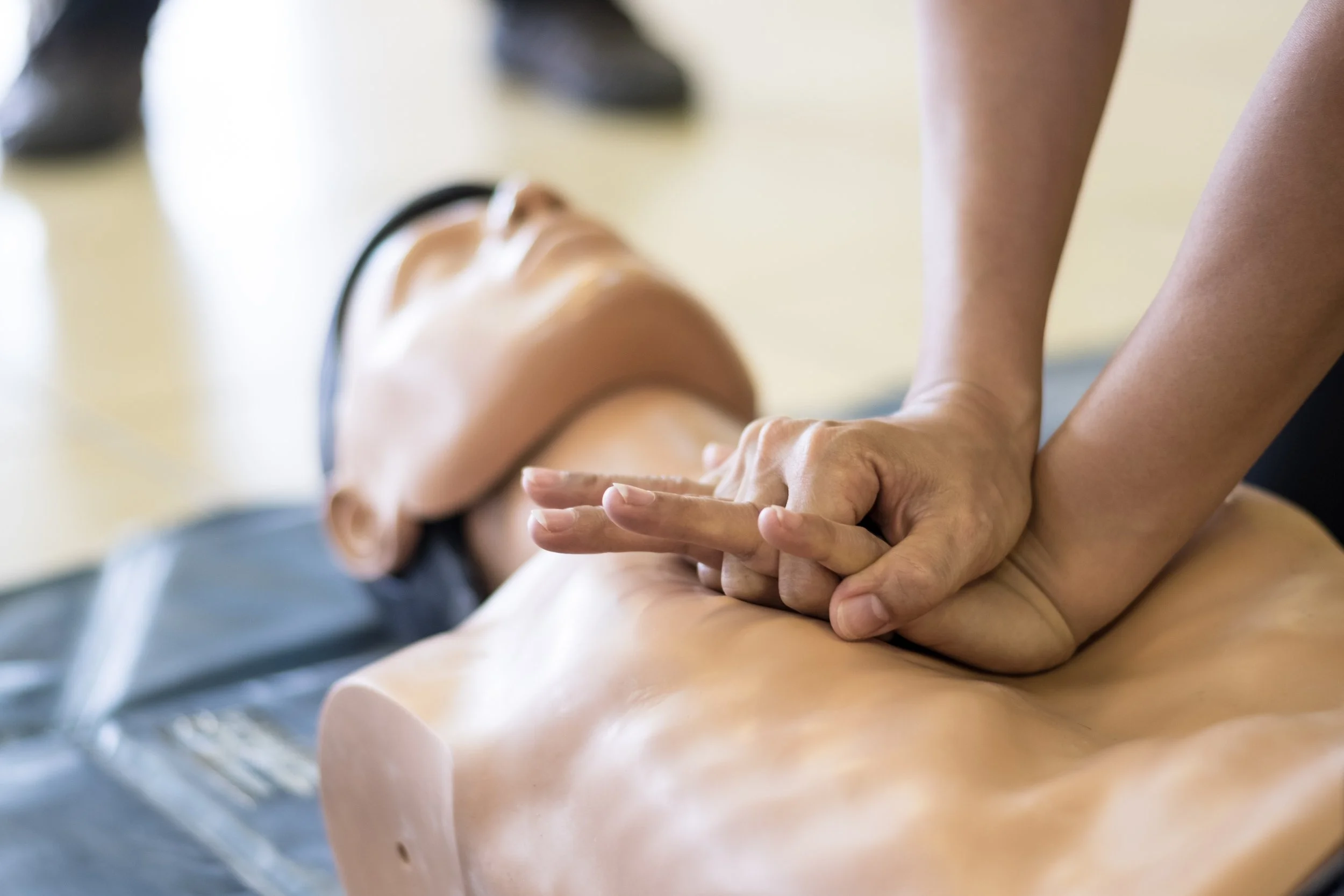
The text for Bill H.492–An Act Requiring Instruction in CPR and the use of Defibrillators for High School Graduation–itself is simple, and has remained relatively unchanged in all of its iterations in Massachusetts’ legislative chambers. It requires the education of CPR and AED usage in high schools – either taught by any instructor for a non-certification course – or a CPR-certified instructor for a certification. The bill also requires students to get hands-on practice in the course to solidify class concepts. Though the regulations and stipulations may seem loose, simply requiring the existence of such programs across Massachusetts is an enormous step towards improving bystander response.
Racial Disparities in Bystander CPR Access and Survival
First, the effectiveness of adolescent CPR education programs has been suggested to not only increase students’ confidence in their abilities to conduct CPR, but also their willingness to apply such skills in an emergency. This greater willingness to act is crucial to addressing is crucial in rectifying another issue in current OCHA responses: major disparities in OCHA survival rates across racial communities. Garcia et. al. showed that Black patients are over 15% less likely than their White-counterparts to receive bystander CPR across all public spheres regardless of their neighborhood and income levels. Likewise, Black patients are significantly less likely to survive an OCHA than their white counterparts. This is in large part due to limited CPR training access in non-White communities. While arguments have been made arguing against the expenses of such classes, Udenzu et. al. demonstrated that such classes need not be a significant time and resource commitment in order to have significant impact: the study featured students learning hands-only CPR through four 90-minute virtual sessions and home-kits for hands-only CPR, and found a nearly 50% increase in confidence for CPR and AED application. Udenzu et. al., with a cohort of students primarily in non-White neighborhoods, then showed that such instruction could be tied to an increase in bystander confidence in non-White communities, which researchers hope can help partially remedy racial disparities in OCHA survival rates.
Importance of Standards for CPR Education
In addition, studies show that effective CPR education depends more on guided instruction rather than rigid certification standards, meaning that substantive training can occur even with minimal resources. For example, Onan et. al. directly pushed against the necessity for stringent, high-tech course material for students to successfully learn CPR. The study instead demonstrated that merely course content was not sufficient to boost bystander awareness – and that no matter the form, guided instruction was still preferable over self-led learning. The study found that instruction-led, simplified basic life support training led to greater increases in CPR knowledge compared to self-guided instruction, even when controlled for course time and content. This was specifically observed in skills that require psychomotor practice and adjustment, such as the ability to deliver high quality chest compressions. However, the nature of the instructors are not limited to adults. Two studies demonstrated that high school students are capable of teaching high quality CPR to one another as well after a group underwent initial training. This highlights the low threshold by which regulations are necessitated for benefits to be seen in the community. Even though Bill H.492 itself specified not needing CPR-certified instructors if the course was not attempting to certify students according to AHA standards, the bill mandating the presence of someone else to quality-check the learning process, regardless of their certifications, is supported by studies to be sufficient. In other words, the bill would set a precedent requiring students to engage in a quality-checked version of bystander CPR, which was more important than stiff requirements for instructors and equipment. In fact, Damvall et. al. found no difference between student performance in hands-only CPR–the current Massachusetts standard–when taught by certified instructors and student instructors. In other words, the importance of CPR education was primarily its guided instruction, rather than any state-of-the-art resources with the potential to pose funding issues for such programs.
Conclusion
Increasing OHCA survival is primarily a matter of raising awareness, not one constrained by high costs or rigid staffing requirements. In fact, even if resources were a barrier, Massachusetts already mandates CPR certification for educators, making them well-positioned to teach life-saving skills. While Bill H.492 may appear modest in scope, research consistently shows that introducing CPR education—regardless of who teaches it—can dramatically enhance bystander readiness. Enacting this legislation is not just a procedural step; it is a life-saving intervention that can reshape community health outcomes for generations.
Bibliography
Haddad P. Bill H.475 [Internet]. Malegislature.gov. 2019 [cited 2025 Mar 11]. Available from: https://malegislature.gov/Bills/191/H475
Tarr B. Bill S.456 [Internet]. Malegislature.gov. 2025 [cited 2025 Mar 11]. Available from: https://malegislature.gov/Bills/194/S456
Damvall DA, Birkenes TS, Nilsen K, Haaland SH, Myklebust H, Nordseth T. Can high school students teach their peers high quality cardiopulmonary resuscitation (CPR)? Resuscitation Plus. 2022 Jun;10:100250.
Zenani NE, Bello B, Molekodi M, Useh U. Effectiveness of school-based CPR training among adolescents to enhance knowledge and skills in CPR: A systematic review. Curationis. 2022 Nov 18;45(1).
Chamdawala H, Meltzer JA, Shankar V, Elachi D, Jarzynka SM, Nixon AF. Cardiopulmonary resuscitation skill training and retention in teens (CPR START): A randomized control trial in high school students. Resuscitation Plus. 2021 Mar;5:100079.
Haddad P. Bill H.492 [Internet]. Malegislature.gov. 2023 [cited 2025 Mar 11]. Available from: https://malegislature.gov/Bills/193/H492
Tsao CW, Aday AW, Almarzooq ZI, Anderson CAM, Arora P, Avery CL, et al. Heart Disease and Stroke Statistics—2023 Update: A Report From the American Heart Association. Circulation [Internet]. 2023 Jan 25;147(8). Available from: https://www.ahajournals.org/doi/10.1161/CIR.0000000000001123
Onan A, Turan S, Elcin M, Erbil B, Bulut ŞÇ. The effectiveness of traditional Basic Life Support training and alternative technology-enhanced methods in high schools. Hong Kong Journal of Emergency Medicine. 2018 Jun 14;26(1):44–52.
Vetter VL, Griffis H, Dalldorf KF, Naim MY, Rossano J, Vellano K, et al. Impact of State Laws. Journal of the American College of Cardiology. 2022 May;79(21):2140–3.
Garcia RA, Spertus JA, Girotra S, Nallamothu BK, Kennedy KF, McNally BF, et al. Racial and Ethnic Differences in Bystander CPR for Witnessed Cardiac Arrest. New England Journal of Medicine. 2022 Oct 27;387(17):1569–78.
Uzendu A, Pagliaro J, Betancourt J, Egun C, Drachman D, Bhatt A, et al. Make Basic Life Support Basic: A novel virtual Hands Only CPR training program in minority school age youth. Resuscitation. 2021 Oct;167:93–4.
Haddad P. Bill H.610 [Internet]. Malegislature.gov. 2021 [cited 2025 Mar 11]. Available from: https://malegislature.gov/Bills/192/H610


The recent surge in states adopting laws that permit physician-assisted suicide (PAS) signals a potential shift in public sentiment, yet the subject remains deeply polarized.