Challenging the Ableism of Genetic Editing Through Policy
Yohanna Endashaw
Introduction
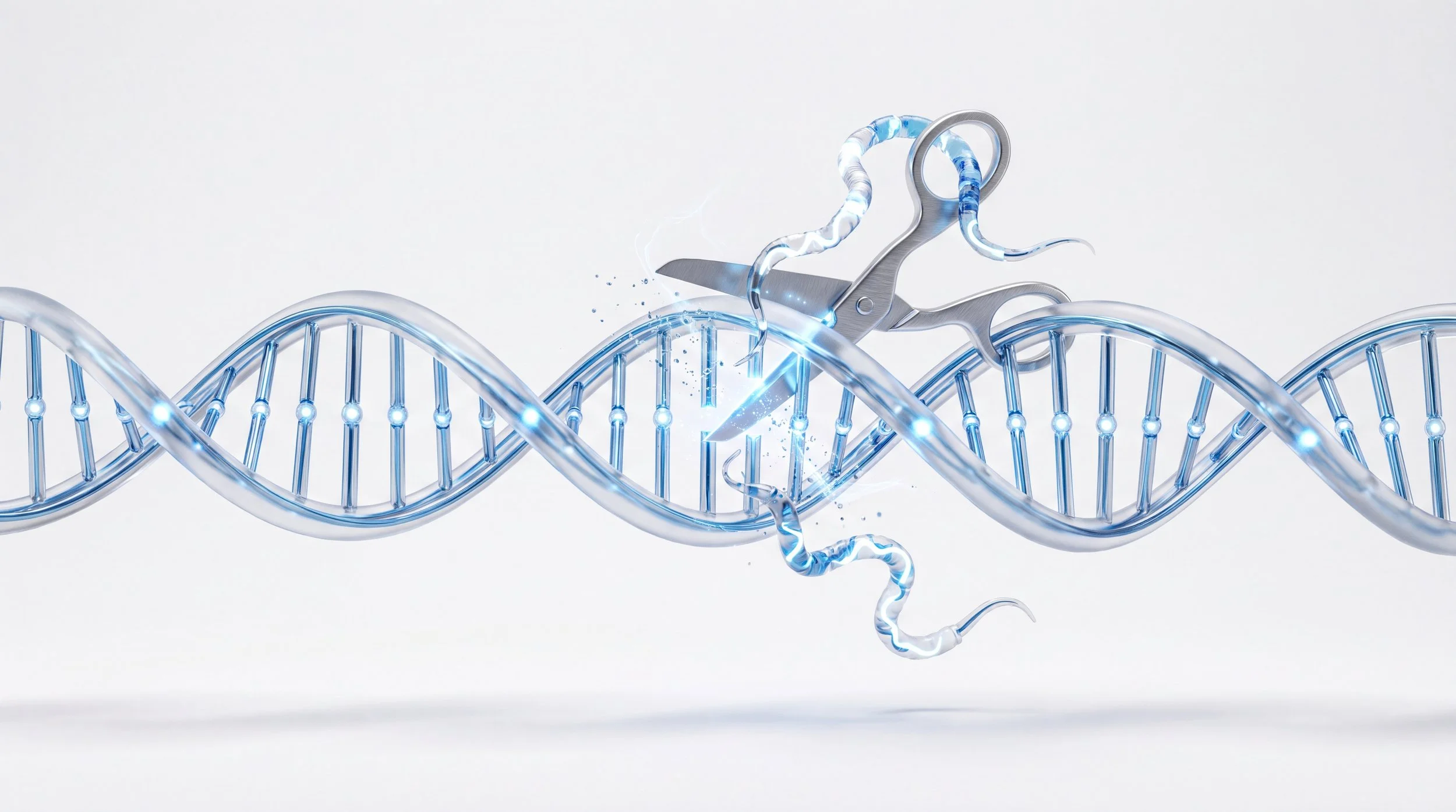
The biological sciences have been revolutionized by a technology that blurs the lines of ethical science: CRISPR-Cas9. This technology, which offers unprecedented control over the human genome, has led to an explosion of literature – over 6,000 genetic studies published.1 But it also calls for some difficult discussions.
The scientific milestone makes it possible to prevent heritable diseases before the child is even born. But this opens the floodgates for other uncontrolled genetic enhancements. What is to say these technologies won’t be leveraged to select other “desirable” traits? And is this ethical? Philosopher Micheal Sandel warns, “The problem with eugenics is that it represents a one-sided triumph of will over giftedness, of dominion over reverence.”2 Suddenly an individual’s innate talents and features are not gifted to them by a genetic roll of the dice. Human aspects that once were gifts can now be bought by those with the power and means to design their children, contributing to their performance and success in every aspect of their lives. Designing a child also means preventing disease. This must be good, correct? According to some academics, maybe not. This tension exposes what disability scholars term the "ableism of prevention": the idea that attempting to prevent a condition is inherently ableism and degrading to individuals who live with that condition because it labels them as undesirable.3 In other words, scholars argue that there is an inherent societal prejudice embedded within the goal of eliminating genetic disabilities. Attempting to prevent a condition before a human is born implies that that condition is undesirable and demeans currently disabled people. While current regulatory frameworks on genetic engineering focus primarily on safety and technical feasibility, they largely fail to address this underlying bias. Furthermore, what some may view as suffering, others can find pride and community in. A new policy architecture is urgently needed, one that integrates disability rights into the core of biotechnological governance to ensure scientific progress does not come at the cost of human dignity. The issue is a disabling society–structured to limit the participation of people with impairments. According to this perspective, disability is not solely a personal characteristic, but rather a result of society failing to accommodate the diverse needs of all its people.
Legislative Landscape: Safety Without Equity
At this time, governance over genetic engineering has established necessary barriers, but it ignores fundamental ethical questions. In fact, the only way the question of genetic engineering is being dealt with currently is avoidance. In the United States, a de facto moratorium exists through FDA refusal to approve clinical trials for heritable genetic modification. While modification is being protected against, genetic profiling still opens the gates to inequity on many fronts. Fortunately, the Genetic Information Nondiscrimination Act (GINA) protects against one instance of inequity: insurance discrimination based on genetic data.4 Yet, policies like these only operate reactively, protecting existing individuals but doing nothing to address the societal prejudice inherent in preventing the birth of people with those same traits. This means that the rulings work to prevent genetic modification and profiling from occurring, but nations still lack discourse on why people so strongly desire to prevent conditions such as deafness, blindness, and Down syndrome. No action is being taken to address and undo our society’s deep-rooted rejection of these variations.
On the global landscape, approaches vary but share this blind spot. Germany’s Embryo Protection Act represents the strictest precautionary principle. It explicitly prohibits the creation of human embryos for research purposes and bans any genetic manipulation of human germline cells. In effect, it stops the research before it can even begin, based on ethical and safety precautions. On the other hand, the United Kingdom’s Human Fertilisation and Embryology Authority operates on a licensing model.5 It does not ban research outright but provides structured oversight by requiring scientists to obtain a license for specific projects involving human embryos, which are reviewed on a case-by-case basis against ethical and scientific criteria. Finally, the World Health Organization provides a general recommendation to proceed with “broad societal consensus," which leaves a lot up to interpretation.6 In general, most frameworks strictly regulate the how and if of genetic editing while failing to question the ableist assumptions behind why certain conditions are targeted for elimination.
Impact on the Community of People who are Disabled
The medical model of disability that many policies support frames disability as an individual deficit requiring correction rather than a form of human diversity. As a consequence, these regulatory gaps have proven to be detrimental to many people with disabilities. This perspective is in direct opposition to the social model of disability previously introduced. The social model identifies societal barriers and attitudes as the disabling factors.7 For example, a building without a ramp disables a wheelchair user, not the person's paralysis. And a hiring manager's assumption that a deaf person can't do a job, or a lack of sign language interpreters, disables a deaf person, not their hearing loss. The policy implication of this distinction is that current governance, by focusing on 'correcting' the individual via genetic editing, inherently validates the medical model and neglects the social one. Society avoids social change by eliminating individuals who require it. Therein lies the policy failure; by targeting genes instead of barriers, governance legitimizes the very ableism it should dismantle. When resources flow toward an “exciting scientific advancement” such as CRISPR, it sends a devastating message to existing disabled individuals: your existence represents a medical failure rather than a valuable form of human variation.
This “expressivist argument”, that genetic prevention expresses a negative judgement on existing disabled lives, articulates the real experience of disabled people.8 While this may appear as a philosophical argument, it is also an empirically supported concern. Research demonstrates that internalized ableism and societal devaluation contribute significantly to mental health disparities amongst people with disabilities. For instance, Bogart (2014) examines the role of “disability self-concept,” finding that negative societal messages and internalized ableism are significant barriers to psychological well-being and adaptation for people with congenital or acquired disabilities, directly linking devaluation to mental health outcomes.9 And many scholars, like Asch, have long argued that the drive to prevent the birth of people with disabilities like Deafness or dwarfism sends a hurtful message that their lives are not worth living. This is not a new debate but a modern extension of historical concerns the community has had about prenatal testing and selective abortion. Thus, CRISPR is a powerful and therefore more concerning tool for the same ableist logic. By discussing disability primarily as a preventable tragedy, rather than an individual experience, these policies neglect the need to build a more accommodating society for every member.
A Path Forward: Integrating Disability Rights
Effective policy must evolve past safety-focused regulation to additionally include equity-centered governance. Implementing the following proposals demand political will, dedicated resources, and a willingness to cede space in decision-making to marginalized communities, a significant reordering of the status quo. But this is not insurmountable and prevents continued ableism. Therefore this transformation requires three key interventions:
First, the United States should ratify and implement the United Nations Convention on the Rights of Persons with Disabilities (CRPD), which explicitly affirms disability as part of human diversity and requires states to combat stereotypes and prejudices.10 This would provide a binding legal framework that forces a shift from a medical to a human rights-based view of disability, making it harder to justify policies that seek to eliminate disabled people.
Second, policymakers should mandate Disability Impact Assessments (DIA) for all publicly-funded genetic editing research. This proactively places equity into the research process, forcing scientists and funders to consider the social consequences of their work before it is done, rather than dealing with the fallout after. Modeled on environmental impact statements, DIAs would require researchers to:
- Consult with disability rights organizations representing targeted conditions
- Predict/Analyze potential for increased stigma and discrimination
- Detail parallel investments in support services and accessibility infrastructure
Third, the WHO must provide a more precise definition for the "broad societal consensus" they have recommended. Furthermore, the organization should explicitly require meaningful participation and assent from disability communities. "Meaningful participation" would look like:
- Seats for representatives of people with disabilities on all international and national regulatory and advisory boards for gene editing.
- Requiring proof of consultation with a diverse range of disability groups (e.g., representing physical, sensory, intellectual, and psychosocial disabilities) before any guidelines are approved.
- Funding for these groups to participate equitably (e.g., paying for their time and expertise).
A vague consensus allows majoritarian views to dominate. A precise definition that requires assent from communities of people with disabilities ensures that the people most affected by these technologies have veto power over decisions that threaten their human rights. Genuine consensus cannot exist without including those whose human rights are directly implicated.
Addressing Counterarguments
Critics may argue that the measures outlined above create hurdles that impede scientific progress. This could come in the form of extra funding, time, and materials spent on trials. However, the purpose of these recommended policies is not to halt research but rather to guide the scientific pursuit with an ethical framework that is entirely lacking at this time. The pursuit of knowledge should be carried out with the intention of benefiting all of society without harming some. Still some argue policies restricting germline editing do impede a certain form of reproductive autonomy, the autonomy to choose specific genetic traits for one's future child without external limitation. Autonomy-based objections to the aforementioned policy proposals can be persuasive to many given that reproductive autonomy is so strongly argued for in the case of abortion. However, there lies a limitation in this idea of autonomy. It is important to note that true choice requires being informed. This means that a parent’s choice should be informed not just by medical data, but by an understanding of the social implications of genetic selection. Without understanding the "expressivist argument" and the social model of disability, a parent's choice is based on an ableist and often inaccurate idea that a disabled life is a life of suffering and less value.8,7 The proposed policies would generate the information and public discourse needed to create a truly informed choice, one that considers the collective impact on the population of people with disabilities. Therefore, the policies do not restrict choice to but improve the quality of the choice by ensuring it is ethically literate, ensuring that individual choices do not reinforce collective harms against vulnerable communities.
Conclusion
Current policies on genetic editing provide necessary protections while simultaneously failing to protect disabled individuals. Hence the proposed policies must be implemented prioritizing disability rights amidst pursuit of scientific progress. Society was designed by those in power, the able-bodied people. And thus, society is inherently disabling, limiting to people with variation, and failing to serve the diverse conditions of all its people. By integrating the affirmative framework of the CRPD and implementing Disability Impact Assessments, the governance of gene editing in the US can begin to challenge the ableism inherent in a prevention-focused approach to genetic editing. The goal is not to prevent advancement but to steer innovation toward cultivating an inclusive future. The pursuit of health should be to strengthen our collective humanity rather than erase some.
Reference List
Doudna JA, Charpentier E. The new frontier of genome engineering with CRISPR-Cas9. Science. 2014;346(6213):1258096.
Sandel MJ. The Case against Perfection: Ethics in the Age of Genetic Engineering. Cambridge: Harvard University Press; 2007.
Wolbring G. Ableism and Favoritism for Abilities Governance, Ethics and Studies: New Tools for Nanotechnologies? Bioethics. 2012;26(8):440-7.
Genetic Information Nondiscrimination Act of 2008, Pub. L. No. 110-233, 122 Stat. 881 (2008).
Human Fertilisation and Embryology Authority. Guidance on Genome Editing [Internet]. London: HFEA; 2023 [cited 2024 Oct 28]. Available from: [HFEA Website]
World Health Organization. Human genome editing: recommendations [Internet]. Geneva: WHO; 2021 [cited 2024 Oct 28]. Available from: [WHO Website]
Oliver M. The Politics of Disablement. London: Palgrave Macmillan; 1990.
Asch A. Disability Equality and Prenatal Testing: Contradictory or Compatible? Fla State Univ Law Rev. 2003;30(2):315-42.
Bogart KR. The role of disability self-concept in adaptation to congenital or acquired disability. Rehabil Psychol. 2014;59(1):107-15.
United Nations. Convention on the Rights of Persons with Disabilities. Treaty Series. 2006;2515:3.

The recent surge in states adopting laws that permit physician-assisted suicide (PAS) signals a potential shift in public sentiment, yet the subject remains deeply polarized.