Hemoglobin Switching, Sickle-Cell Therapy, and the Future of Gene Editing
Interview by Linda Lui
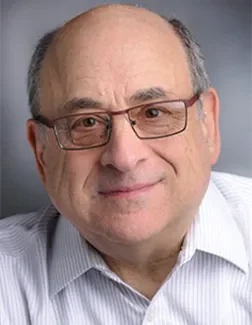
Linda Liu: Dr. Orkin, you’re a Harvard Medical School alumnus and pediatric hematologist at Dana-Farber and Boston Children’s. You’ve been elected to the National Academy of Sciences and the National Academy of Medicine, and you recently received the 2024 Shaw Prize in Life Sciences and Medicine. Your lab has studied blood disorders for more than forty years and helped identify BCL11A as the regulator of the fetal-to-adult hemoglobin switch, laying the foundation for a CRISPR-based therapy for sickle-cell disease, one of the first gene-editing treatments to reach patients.Could you tell me more about your personal path? Why did you focus on hemoglobin switching and blood disorders?
Stuart Orkin: When I was an undergraduate at MIT, I started out wanting to study physics; however, I soon realized that many of my classmates were much better at physics than I was, so I began exploring other fields. I was taking a biology course at the time that was taught by Salvador Luria, one of the founders of molecular virology. It was the dawn of molecular biology. The class wasn’t about frogs or plants; it was about genes, viruses, and molecules. That really captured my interest. From there, I moved into biochemistry and early molecular biology. I saw that these contemporary sciences could be applied to medicine. Blood fascinated me because it was accessible, complex, and clinically relevant–red cells, white cells, platelets, each with their own function and inherited disorders. It felt like a field where I could connect basic science with medical relevance. After medical school and clinical training, I joined the NIH as a Public Health Service officer, instead of military service. I worked in Philip Leder’s lab, who was among the first to use molecular biology to study higher eukaryotic systems, like hemoglobin and immunoglobulin production, which helpedsolidified my focus on blood. Initially, I worked on the molecular basis of thalassemia, using the new tools of DNA cloning and sequencing in the 1980s to define the mutations responsible. But what really drove me was a broader curiosity: how blood cells form and how gene expression determines cell identity. For most of my career I was a basic scientist. The clinical applications were always the icing on the cake. I was motivated by discovery itself, by understanding how things worked.
Linda Liu: That’s amazing! Could you describe how that early work led to the discovery of BCL11A and hemoglobin switching?
Stuart Orkin: After we mapped the thalassemia mutations, we realized that still did not explain how red cells were produced. We began looking for transcription factors controlling red-cell genes and that’s how we identified GATA1, which became the prototype for a hematopoietic-specific transcription factor, the master regulator of red-cell gene expression. Initially, we thought GATA1 might also control the switch from fetal to adult hemoglobin, but it did not. However, studying GATA1 taught us how cell-specific transcription works , which left us with the big unanswered question: what actually regulates the fetal-to-adult switch? This finding took another fifteen years. Eventually, through genome-wide association studies (GWAS), BCL11A emerged as the critical factor.
Linda Liu: I read that you identified a GATA1-binding site in the BCL11A enhancer and called it the gene’s “Achilles heel.” Can you elaborate?
Stuart Orkin: Yes, BCL11A was first identified genetically. Myself and other scientists had been searching for the switch factor for years with no luck. GWAS revealed it indirectly, and then we used mouse models lacking BCL11A in red cells and found that it cured sickle-cell mice by reactivating fetal hemoglobin. This showed BCL11A was a legitimate therapeutic target. When CRISPR arrived, we were quick to adopt it. Around the same time we discovered an enhancer within the BCL11A gene that controlled its expression. Using CRISPR, we mapped where to cut to weaken that enhancer. A single precise cut at the GATA1 site, what I called the Achilles heel, was enough to substantially reduce BCL11A expression, increasing fetal hemoglobin. Because this enhancer is active only in red cells, targeting it leaves other tissues unharmed.That exact site became the foundation for the CRISPR Therapeutics or Vertex treatment, now known as Casgevy, which got approved almost ten years later.
Linda Liu: This whole story spans decades, from Janet Watson’s 1948 observation that fetal hemoglobin protects against sickle-cell disease to your 2015 paper that led to today’s therapy.
Stuart Orkin: Exactly. Watson was a clinician who simply observed that patients with more fetal hemoglobin fared better. For decades, the question was whether we could uncover and control that switch. We now know that BCL11A is the physiological regulator, one factor with an outsized impact. That’s remarkable. For a long time, people assumed the control was diffuse and complex, but it turned out to hinge on a single master switch.
Linda Liu: When you first identified BCL11A’s role, did you imagine we’d have approved gene therapies for it?
Stuart Orkin: We speculated, you always do in papers and grant proposals, but it was the mouse experiments that convinced me it was possible. We saw that inactivation could cure a sickle-cell mouse, which made it real. Of course, turning that insight into a human therapy is a long, uncertain road. Linda Liu: Now that gene editing is becoming clinical reality, what do you see as the biggest ethical or regulatory challenges?
Stuart Orkin: If you are treating a devastating disease without existing cures, I see no ethical issue with somatic gene editing. The greater questions arise for less severe or more common diseases, where you must weigh risk, benefit, and accessibility.Each case involves IRB discussions and, frankly, business considerations: will companies invest if the market is small?
Linda Liu: Do you think germline editing should ever be allowed?
Stuart Orkin: Personally, I think we should set it aside for a very long time. We simply can not do it safely yet, and the implications are enormous.
Linda Liu: In class we have discussed how expensive and inaccessible these therapies are. What happens if only the wealthy can afford cures?
Stuart Orkin: That’s a serious concern. Current CRISPR therapies involve removing hematopoietic stem cells, editing them, and reinfusing them, which is essentially a bone-marrow transplant. However, it's complex, lengthy, and extremely costly.Insurance may cover it in wealthy countries, but globally it’s not scalable. We can not perform bone-marrow transplants for hundreds of thousands of patients. We need simpler, in vivo approaches. For example, delivering editing machinery directly to bone marrow cells via nanoparticles. Research is ongoing, but efficiency is still low. Over time, technology improves and costs fall. The key priorities are that therapies be effective and safe; only then can we focus on broader accessibility.
Linda Liu: You sound very hopeful.
Stuart Orkin: I am. This is just the beginning. People predicted gene therapy would cure everything decades ago. It never works that way — progress is incremental and requires patience, rigor, and luck.A single clinical setback could have derailed the field, as happened in the early 2000s with the Gelsinger case in viral gene therapy, which delayed progress for years. Innovation is risky, but worth it. Linda Liu: What does this long timeframe teach about persistence in science?
Stuart Orkin: Most experiments fail. You do the work for the few that succeed and open new doors. Science demands persistence and rigor. You must constantly evaluate your path and be ready to adjust the course.
Linda Liu: You have given countless talks and interviews. Is there a question you wish people asked more often?
Stuart Orkin: Yes, particularly about sickle-cell disease and equity. We have known its molecular basis since the 1940s and ’50s, yet translating that knowledge into therapies has been painfully slow.Part of the delay is scientific difficulty, but part is social due to inadequate funding and attention because the disease disproportionately affects less-advantaged populations. Other rare disorders with strong advocacy receive far more support.I hope that recent breakthroughs draw renewed investment and focus. Sickle-cell disease is a major global health issue, especially in India and Africa, and deserves sustained effort. Also, while gene editing is a triumph, imagine if we could achieve the same hemoglobin effect with a pill, something inexpensive, oral, and globally distributable. This is why we still pursue basic research: understanding gene regulation could yield simpler, more accessible treatments.
Linda Liu: Exactly — if science can’t reach the people who need it, what’s the point?
Stuart Orkin: That’s right.
Linda Liu: Thank you so much for speaking with me today!
Stuart Orkin: My pleasure, and good luck with your work!
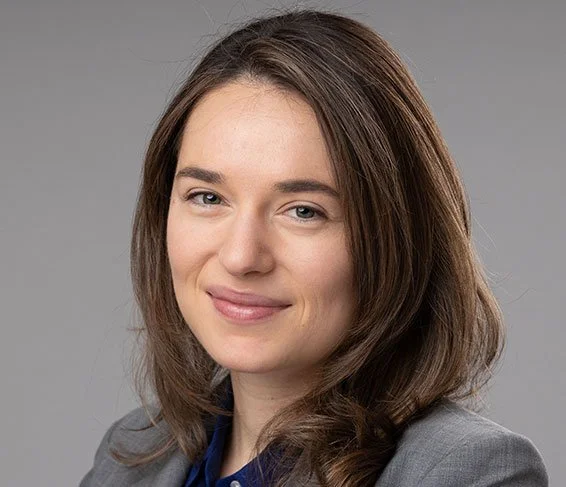
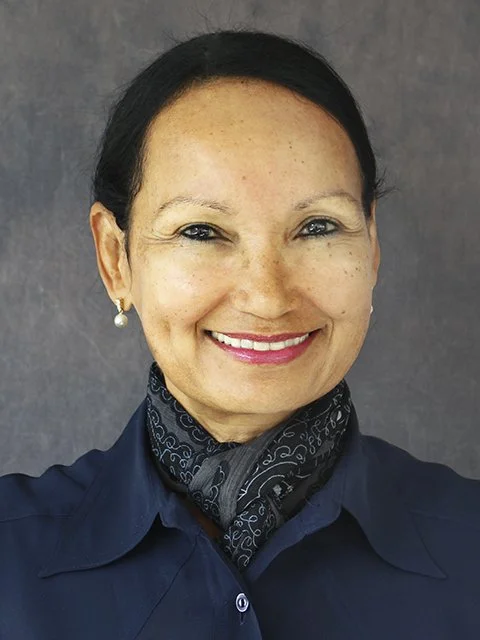
A Q&A interview with Dr. Stuart Orkin exploring his academic journey and discovery of BCL11A and hemoglobin switching.