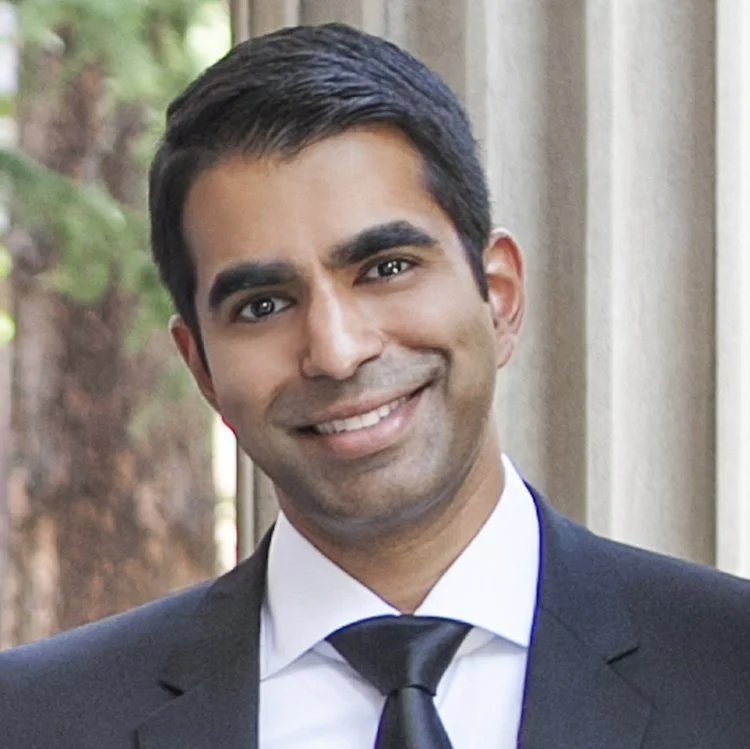
Advancements and Challenges in Lung Cancer Screening: A Conversation with Dr. Chi-Fu Jeffrey Yang and Alex Potter of ALCSI

HUHPR Senior Editor Natalie Wing interviewed Dr. Chi-Fu Jeffrey Yang, MD and Alex Potter. Dr. Yang is a thoracic surgeon at Massachusetts General Hospital and an assistant professor of surgery at Harvard Medical School. He received his B.A in biochemistry from Harvard College and his M.D at Harvard Medical School. He also started the American Lung Cancer Screening Initiative (ALCSI). Alex Potter is the co-founder and Executive Director of the ALCSI.

Read More
HHPRComment
Qatar 2022: An Unforgettable World Cup for Global Health

Rarely are histories of enslavement, colonial plunder, and neocolonial extraction—along with contemporary unfettered racial capitalism—considered factors that shape global dynamics of illness. By breaking these epistemic confines, global health professionals can expand the range of possibilities for global health interventions to encompass reparative and redistributive justice. Applying this approach to Qatar, one can appreciate that centuries of extractive colonial practices perpetrated by Great Britain on the Indian Subcontinent (which drained $45 trillion in wealth) resulted in the mass poverty that drives migration into the petrostate. Reparations for the colonized nations that are sources of migrant labor could ensure no individual needs to pursue precarious, often deadly, ‘employment’ as the only means of providing for their family.

Read More
HHPRComment
Neonatal Mortality and the Trade-off Hypothesis: A Conversation with Dr. Benjamin Sosnaud

HHPR Senior Editor Evan Hsiang interviewed Dr. Benjamin Sosnaud, PhD. Dr. Sosnaud is an assistant professor of Sociology at Trinity University. His research centers around the inequalities in health outcomes, with his most recent work focusing on the socio-demographic inequalities of infant mortality. Dr. Sosnaud received his B.A degree at Duke University, and his M.A and Ph.D degrees at Harvard University.

Read More
The Digital Mental Health Paradox: Is Now the Time to Unlock the Potential?

The potential of digital mental health, whether offered through apps or video visits, to increase access to high-quality care is clear. Yet by all metrics, mental health outcomes continue to worsen. While the rise of social media and the impact of screen time is deleterious to some, its impact alone is not enough to explain the lack of benefit seen from digital mental health.

Read More
HHPRComment
The Haitian Cholera Outbreak and its Implications on Global Health Equity: A Conversation with Dr. Louise Ivers

HHPR Senior Editor Beier Nelson interviewed Dr. Louise Ivers, MD, MPH. She is the director of the Harvard Global Health Institute as well as the director of Massachusetts General Hospital’s Center for Global Health. Dr. Ivers has spent much of her work in Haiti, initially improving HIV treatment access, and in the last decade supporting the medical response to the cholera outbreak in the nation after the 2010 earthquake. 

Read More
A Framework to Address Maternal and Child Health Inequities as a Place-Based Issue

Maternal and child health inequities are a key indicator for community health and wellbeing. Black communities are especially burdened with unjust maternal and infant mortality. These outcomes are upheld by place-based factors known as the social and structural determinants of health, including structural racism. While attention to inequitable MCH outcomes has grown, the authors argue that MCH should be addressed as a place-based issue.

Read More
HHPRComment
Everything is Bigger in Texas: The Tale of $54,000 COVID Tests

On paper, the nature of the freestandng ER (FSER), a concept dating back to the 70s, represents a solution to the problem of poor access to urgent care—the proliferation of FSERs ideally leads to a healthy competitive market that ultimately drives down urgent care costs, fosters care improvement, and incentivizes physicians and stakeholders to expand urgent care access to neighborhoods, rural towns, and retail areas. This has, however, has not been the case, and perhaps most strikingly during the COVID-19 pandemic, where FSERs, most prominently in the state of Texas, have engaged in the practice of pandemic gouging.5 Though not much discourse or new data exist on the financial dynamics and operations of FSERs, examining their existence, along with the context of poor health literacy, poor regulation, for-profit healthcare they exist in, sheds light on the extreme manifestations of a fee-for-service system, and it is a telling example of a policy that is promising in theory but unsuitable in practice.

Read More
HHPRComment
Taking a Closer Look at Stem Cell Research: A Conversation with Francesca Mariani

HHPR Senior Editor Kimtee Kundu interviewed Francesca Mariani, Ph.D. Dr. Mariani is an Associate Professor at the Keck School of Medicine of the University of Southern California (USC). She received her Ph.D. from the University of California, Berkeley and completed her Post-Doc at the University of California, San Francisco. Her expertise is in the area of stem cell biology, with particular focus on skeletal repair and regeneration.

Read More
HHPRComment
The Future of Gene Therapy in Health Care: A Conversation with Dr. Steven Pearson

HHPR Associate Editor Yewon Lee interviewed Steven D. Pearson, MD, MSc. Dr. Pearson is the founder and current President of the Institute for Clinical and Economic Review (ICER), an independent non-profit organization that conducts evidence-based reviews of health care interventions, such as drugs, devices and diagnostics, that help patients, doctors, and everyone else in the healthcare system know what works.

Read More
What the End of the Medicaid Continuous Coverage Requirement Means for Health Care Coverage and Access

Medicaid enrollment has grown significantly during the pandemic. This growth has primarily been driven by the continuous coverage requirement, a provision in pandemic relief legislation initially tied to the federally-declared public health emergency (PHE). States’ current enrollment procedures and capacity, as well as differences in expected approaches to completing redeterminations, will have significant implications for coverage and access outcomes.

Read More
Calling In the American Health Care System for Reproductive Justice: A Conversation with Loretta Ross

HHPR Senior Editor Jessie Liu interviewed professor and activist Loretta J. Ross about her personal journey with the reproductive justice movement and how changes to the American health care system can be part of the path forward.

Read More
Combatting Maternal Mortality through Trustworthiness and Advocacy: A Conversation with Dr. Neel Shah

What we need to do is realize that everybody has an important role to play in addressing maternal mortality, but they've got to do it with an awareness of their positionality. Academia has a role, government has a role, and the private sector has a role. It’s okay for people to take different strategies and tactics, and even to some extent have different goals. But what we need is a shared framework and vision for what a better world looks like, and a shared set of values.

Read More